Method
Tap a time to start a timer.
Heat the oven to 180°C (160°C fan), gas 4. Line a 20 cm square tin with baking paper, leaving an overhang on two sides.
Melt the butter, biscuit spread and honey in a small saucepan over a low heat, stirring until smooth. Remove the pan from the heat and let the mixture cool slightly.
Whisk the egg and Greek yogurt in a mixing bowl, then stir in the melted mixture until combined.
Add the porridge oats and whey protein powder and stir until no dry whey is left. The mixture is thick and sticky.
Spoon the mixture into the lined tin, then squash it firmly into all four corners and smooth the top.
Bake until the sides turn golden and the centre is set but still gives a little under a finger.
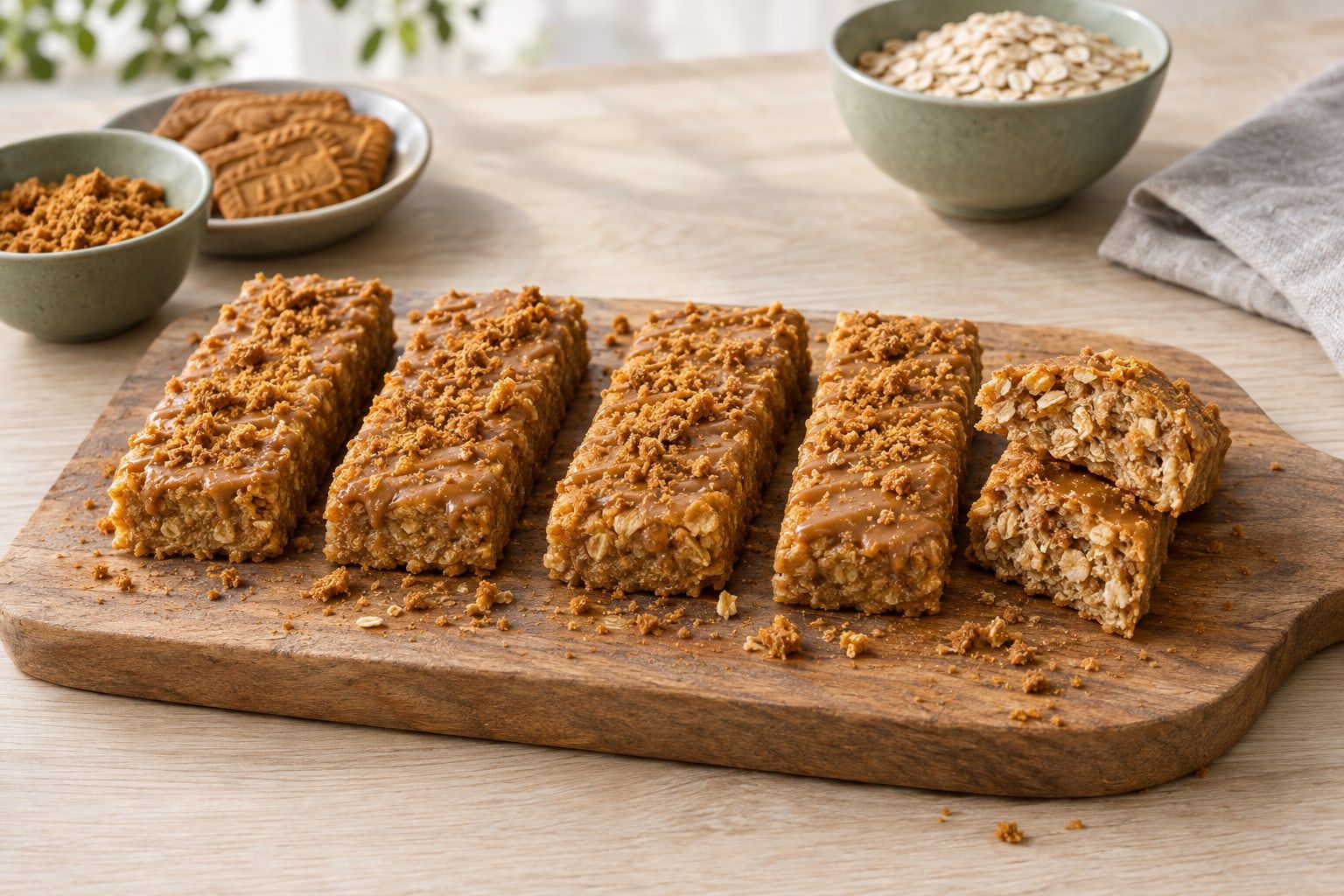
While the flapjack bakes, crush the ginger nuts in a freezer bag with a rolling pin. Scatter them over the hot flapjack and press lightly.
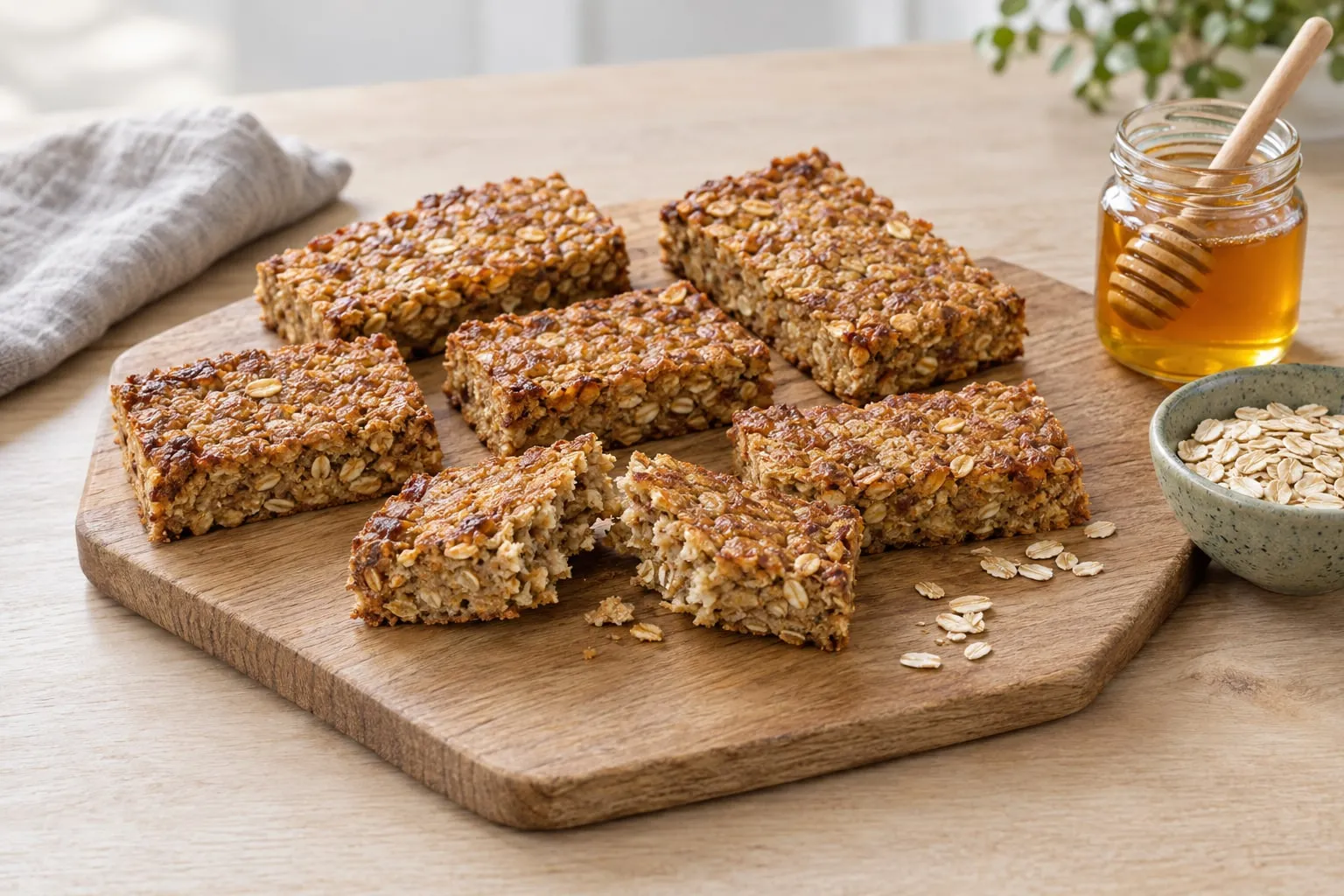
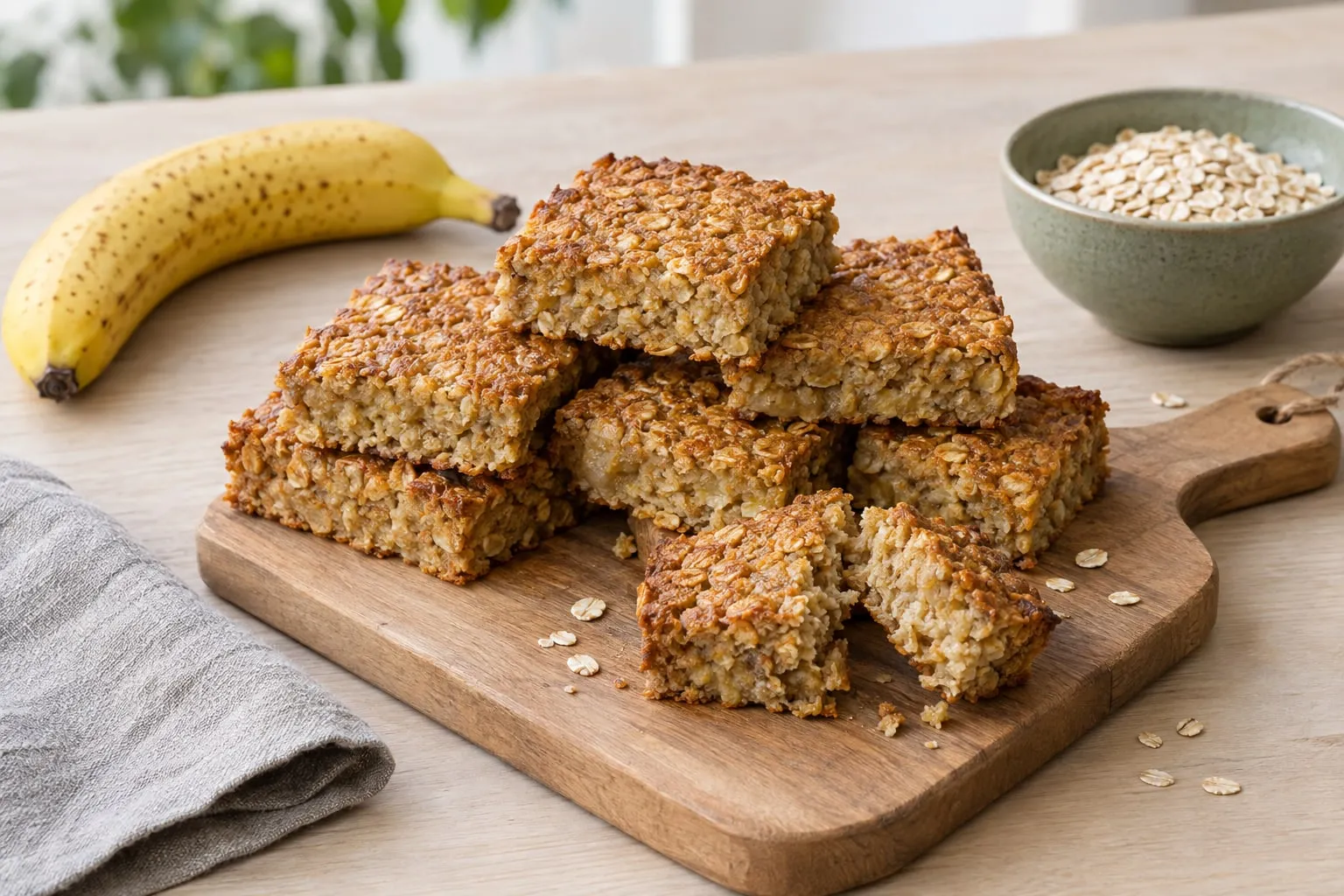
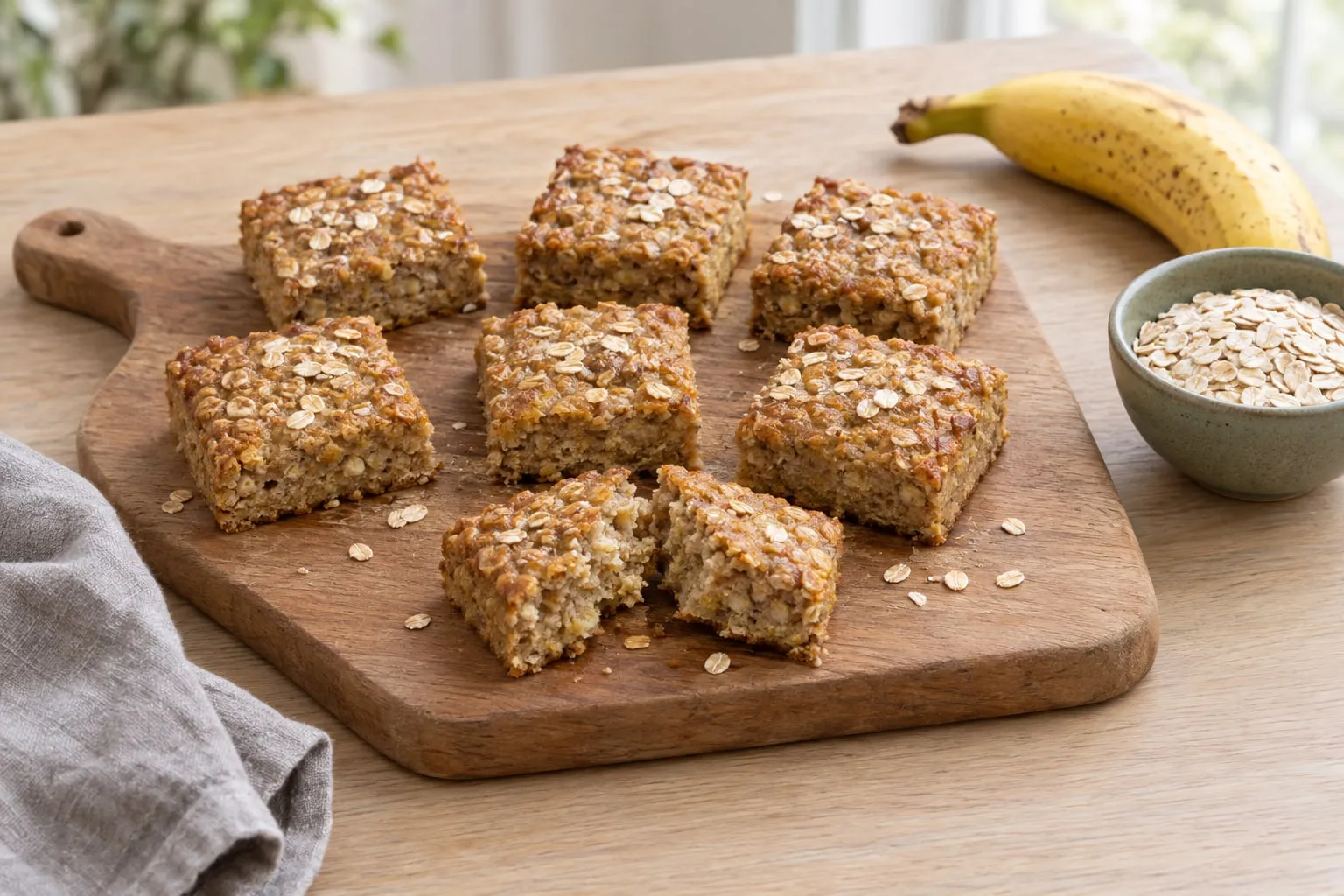
Let the flapjack cool fully in its tin, then lift it out by the paper and slice into 8 bars.
How to tell it's done
- The sides are deep golden and start to shrink from the paper.
- The centre has set but still feels a touch soft.
Tips for success
- Warm the spread gently
The biscuit spread, butter and honey need only a low heat for about 2 minutes. Stir constantly, because the sugar in the spread catches and scorches quickly.
- Cool the melted mixture before the egg goes in
Leave the pan for 2 minutes so the egg does not scramble when the warm mixture is stirred in.
- Pack the tin tightly
Use the back of a spoon to squash the mixture into every corner. Loosely packed oats fall apart when the bars are sliced.
- Crush the ginger nuts while the bake is still hot
Pressed lightly into the hot surface, the crumbs stick as the flapjack cools. Added later they fall off.
Boost the protein
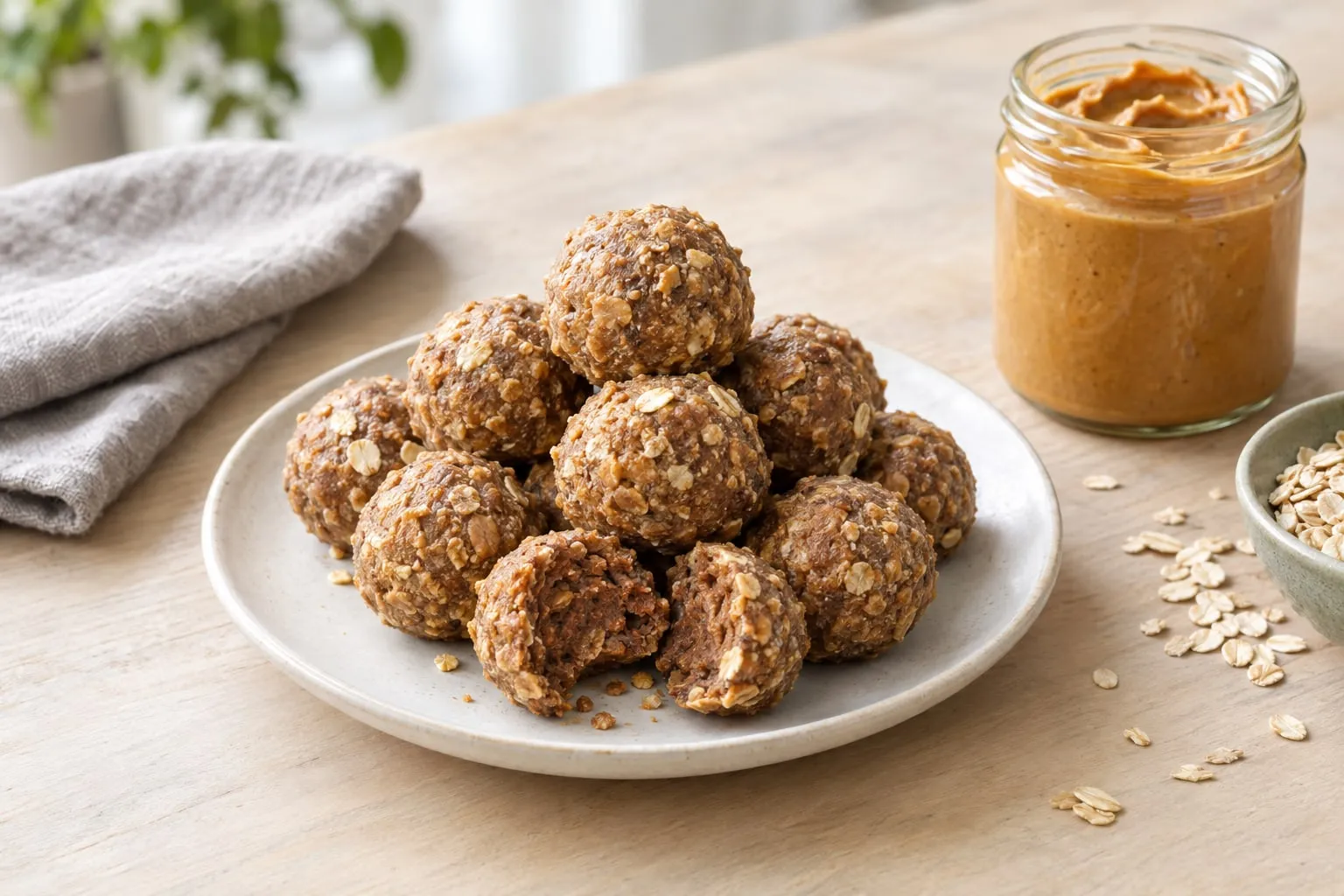
- Replace the 60 g caramelised biscuit spread with 60 g smooth peanut butter: about +1.5 g protein per flapjack, with a different flavour.
- Serve each flapjack with 100 g strained 0% Greek yogurt on the side: +10 g protein.
Choosing ingredients
A smooth spread melts evenly into the butter and honey. The crunchy kind leaves biscuit pieces that burn on the base of the pan.
Whey stirs in most easily. Casein drinks up more moisture, so add 2 tablespoons of extra yogurt, while a vegan pea and rice blend gives a grainier bar.
Variations
- Bite-sized pieces
Cut the cooled slab into 16 squares instead of 8. Each piece has about 6 g protein, and the baking time is unchanged.
- Chocolate drizzle
Melt a little dark chocolate and drizzle it over the cooled slab before cutting, then chill for 15 minutes to set.
Serve it with
- Strained Greek yogurt
- Tea or coffee
Storage
Store the bars in a lidded box in the fridge for 5 days at most, because they contain egg and yogurt.
Freeze individually wrapped bars for up to 2 months and defrost at room temperature for about an hour.
Troubleshooting
Why are my Biscoff protein flapjacks crumbly?
Either the mixture was packed loosely or the slab was cut while still warm. Press it firmly into the tin and wait the full 2 hours before slicing.
Why are the Biscoff protein flapjacks dry?
The tin stayed in the oven too long, and whey turns dry with extra heat. Check at 20 minutes and stop while the middle still gives slightly, because the bars keep setting as they cool.
Frequently asked questions
How much protein is in a Biscoff protein flapjack?
One bar from the batch of 8 gives 12 g protein and 218 kcal, which puts 22% of its energy in protein.
Can I make a Biscoff protein flapjack recipe without Biscoff?
Yes. Use any smooth caramelised biscuit spread, or replace it with 60 g smooth peanut butter for a different flavour.
Do protein flapjacks with biscuit spread need to be kept in the fridge?
Yes. Egg and Greek yogurt go into the mixture, so the bars are kept cold and last up to 5 days.
Made it? Rate the recipe
Read next
- Protein in OatsProtein in oats: porridge oats have 10.9 g protein per 100 g dry, so a 40 g portion gives 4.4 g. Porridge made with milk or water, and ways to add more.
- How Much Protein Do You Need Per Day?How much protein do I need? The UK reference is 0.75 g per kg of body weight a day, or 52.5 g at 70 kg. See food values and a worked example day.
Written by The Protein Recipes editorial team. Nutrition is calculated from the ingredient list using CoFID. Read how our recipes are made and how we correct mistakes.