Method
Tap a time to start a timer.
Heat the oven to 200°C (180°C fan), gas 6. Line the baking tray with baking paper.
Stir the soy sauce, honey, ginger, garlic, sesame oil and water together in a small saucepan. Pour half into a small bowl.
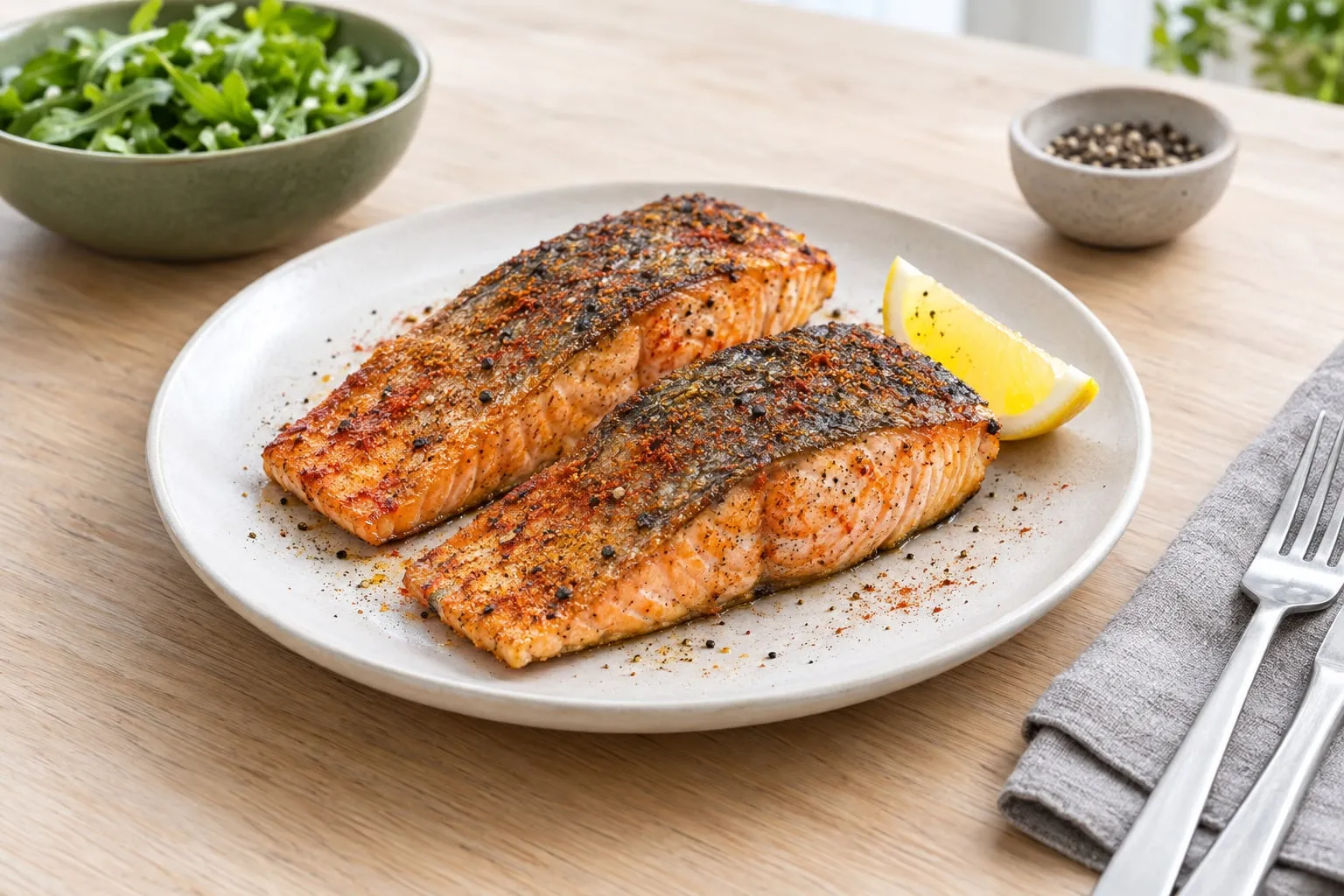
Lay the salmon on the tray and brush the tops with the glaze from the bowl. Bake on the middle shelf for 10–12 minutes, until the flesh is opaque and flakes easily.
Meanwhile, rinse the basmati rice and boil it in a pan of water for 10 minutes. Add the edamame beans for the last 3 minutes, then drain and keep warm.
Steam the halved pak choi in a pan with a splash of water and a lid for 3 minutes, or until the stems are just tender.
Put the small saucepan with the remaining glaze over a medium heat and simmer for 2 minutes until slightly thickened.
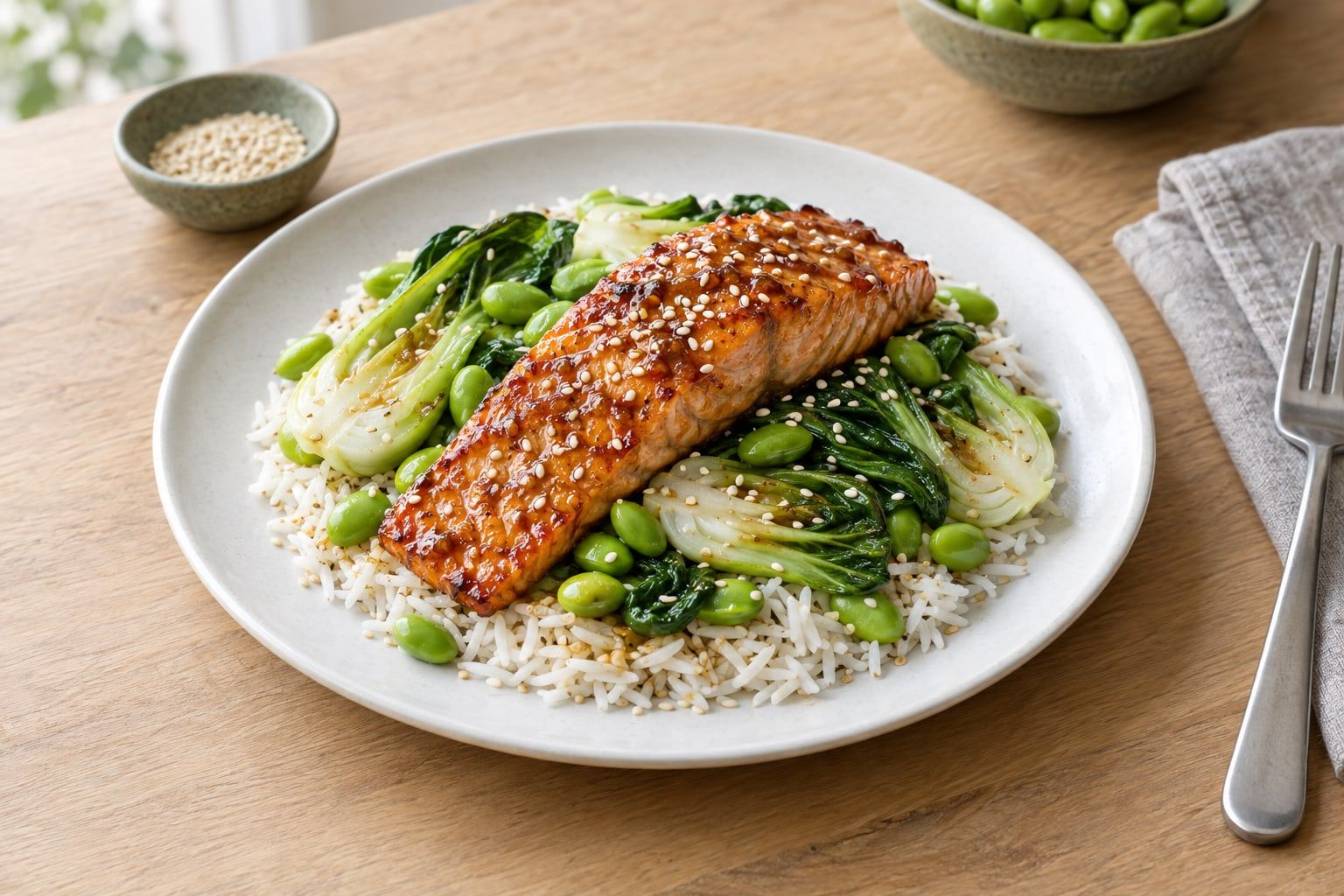
Divide the rice and edamame between four plates, add the pak choi and salmon, spoon over the hot glaze and scatter with the sesame seeds.
How to tell it's done
- Core temperature: 63°C in the thickest part, checked with a probe thermometer.
- The salmon flesh is opaque and flakes easily with a fork, or reads 63°C in the thickest part.
- The glaze has thickened enough to cling to a spoon.
Tips for success
- Keep the glaze for the end
Brush half of the glaze onto the salmon before baking and simmer the other half in a small pan for 2 minutes. This gives a sticky coating on the fish and a safe sauce to spoon over.
- Watch the clock, not the colour
A 160 g fillet is done in 10–12 minutes at 200°C. Fish carries on cooking on the tray, so take it out as soon as the flesh turns opaque and flakes.
- Cook the rice and edamame together
The edamame beans go into the rice pan for the last 3 minutes. It saves a pan and the beans stay tender and green.
Boost the protein
- Serve with 100 g more edamame beans in place of 100 g pak choi: about +2 g protein per serving.
- Swap the 320 g basmati rice for 320 g dried lentil or chickpea pasta, boiled for 8–10 minutes: +11 g protein per serving.
Choosing ingredients
Buy skinless salmon fillets of about 160 g each, even in thickness, so all four bake in the same time. Frozen fillets work if fully thawed first.
Use reduced-salt soy sauce if you can, as soy is the main salt in the dish.
Variations
- In a frying pan
Fry the salmon in 1 tsp rapeseed oil over a medium heat for 4 minutes on one side and 3 minutes on the other, then add the glaze for the last minute.
- With tamari for gluten-free
Swap the soy sauce for tamari and check that it is labelled gluten-free. The method and timings stay the same.
Serve it with
- Cucumber and sesame salad
- Steamed tenderstem broccoli
- Rice noodles
Storage
Keep leftover teriyaki salmon in an airtight container in the fridge for up to 2 days.
Eat it cold flaked over rice, or reheat gently until piping hot, as salmon turns dry if reheated for long.
Troubleshooting
Why is my teriyaki salmon dry?
The fillets were overcooked. Bake for no more than 12 minutes and take them out as soon as the flesh turns opaque and flakes.
Why did the teriyaki glaze burn on the tray?
The glaze caramelises quickly at 200°C. Brush it on just before baking, and keep half back to simmer in a pan instead.
Frequently asked questions
How much protein is in this teriyaki salmon?
Each of the four servings has 45 g protein and 728 kcal, so 25% of the energy comes from protein. That includes the rice and edamame.
How much sugar is in the teriyaki glaze?
One tablespoon of honey across four servings gives about 4 g sugar per portion, so it is much lower than bought teriyaki sauce.
Does teriyaki salmon work with frozen fillets?
Yes. Thaw the fillets fully in the fridge, pat them dry with kitchen paper and bake as in the recipe.
Made it? Rate the recipe
Read next
- How Much Protein Is in a Tin of Tuna?How much protein in tin of tuna: a 145 g tin in brine, drained to about 102 g, has 25.4 g protein and 111 kcal. Brine, oil and fresh tuna compared.
- Protein in SalmonHow much protein in salmon fillet: a 120 g raw fillet has 24.5 g protein and 260 kcal. Raw, baked, smoked and tinned salmon per 100 g and per portion.
Written by The Protein Recipes editorial team. Nutrition is calculated from the ingredient list using CoFID. Read how our recipes are made and how we correct mistakes.