Method
Tap a time to start a timer.
Pour the semi-skimmed milk into the blender jug and spoon in the Greek yogurt.
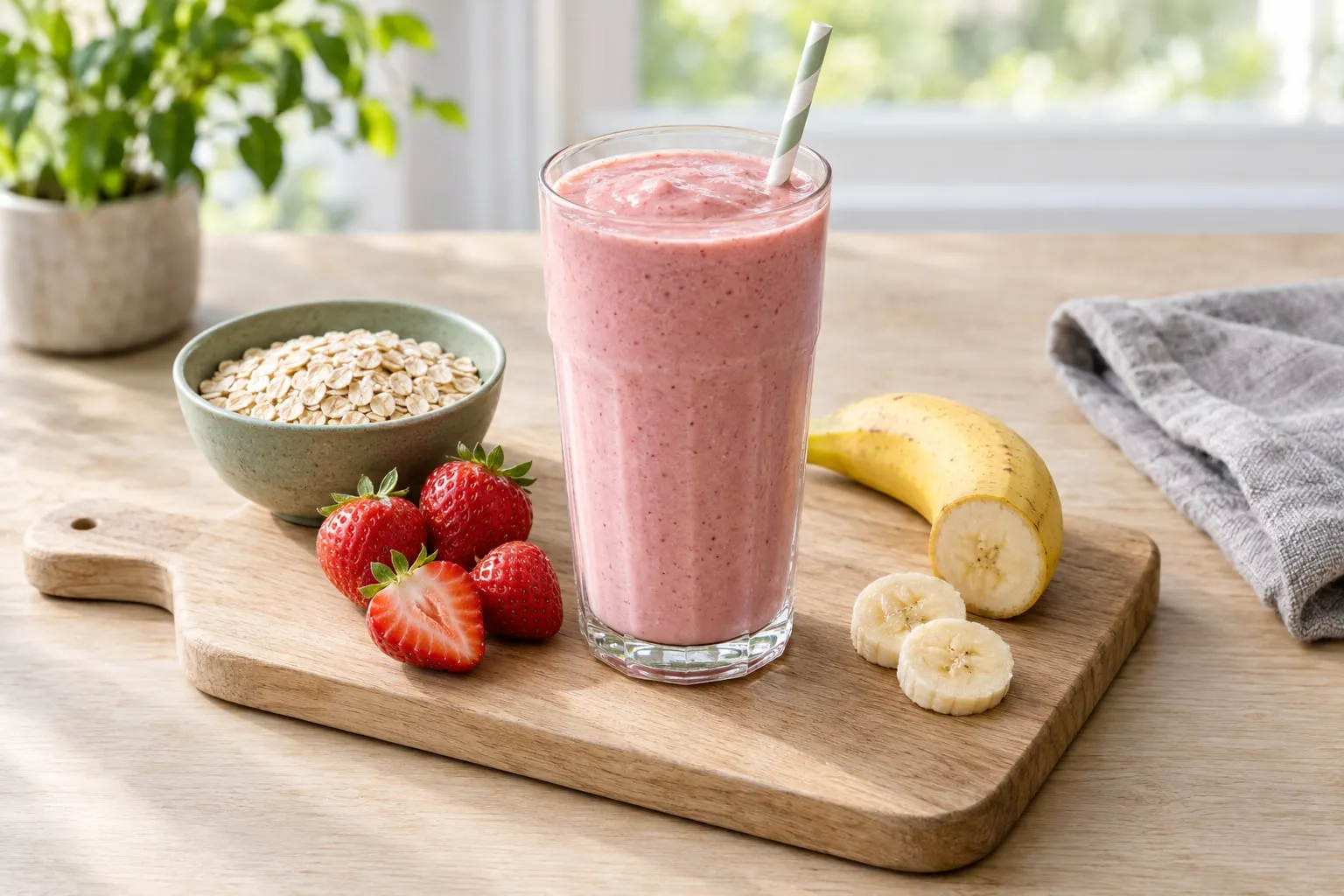
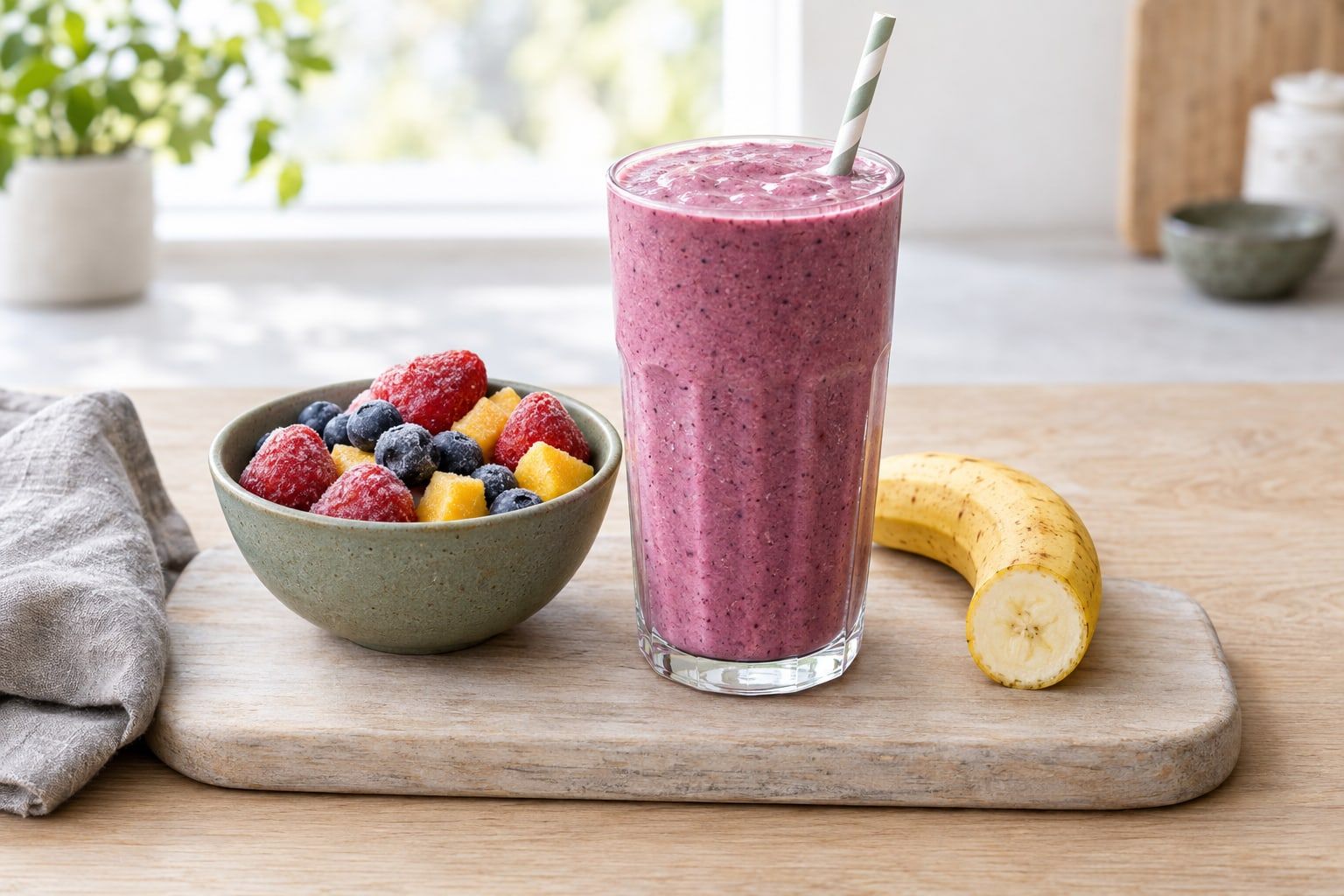
Peel the banana and break it into the jug, then add the frozen strawberries, blueberries and mango.
Blend on high until completely smooth and thick, with no pieces of fruit left. Stop and stir once if the fruit sticks.
Check the texture and, if it will not pour, add 2 tbsp milk and blend for 5 seconds more. Pour into a tall glass.
How to tell it's done
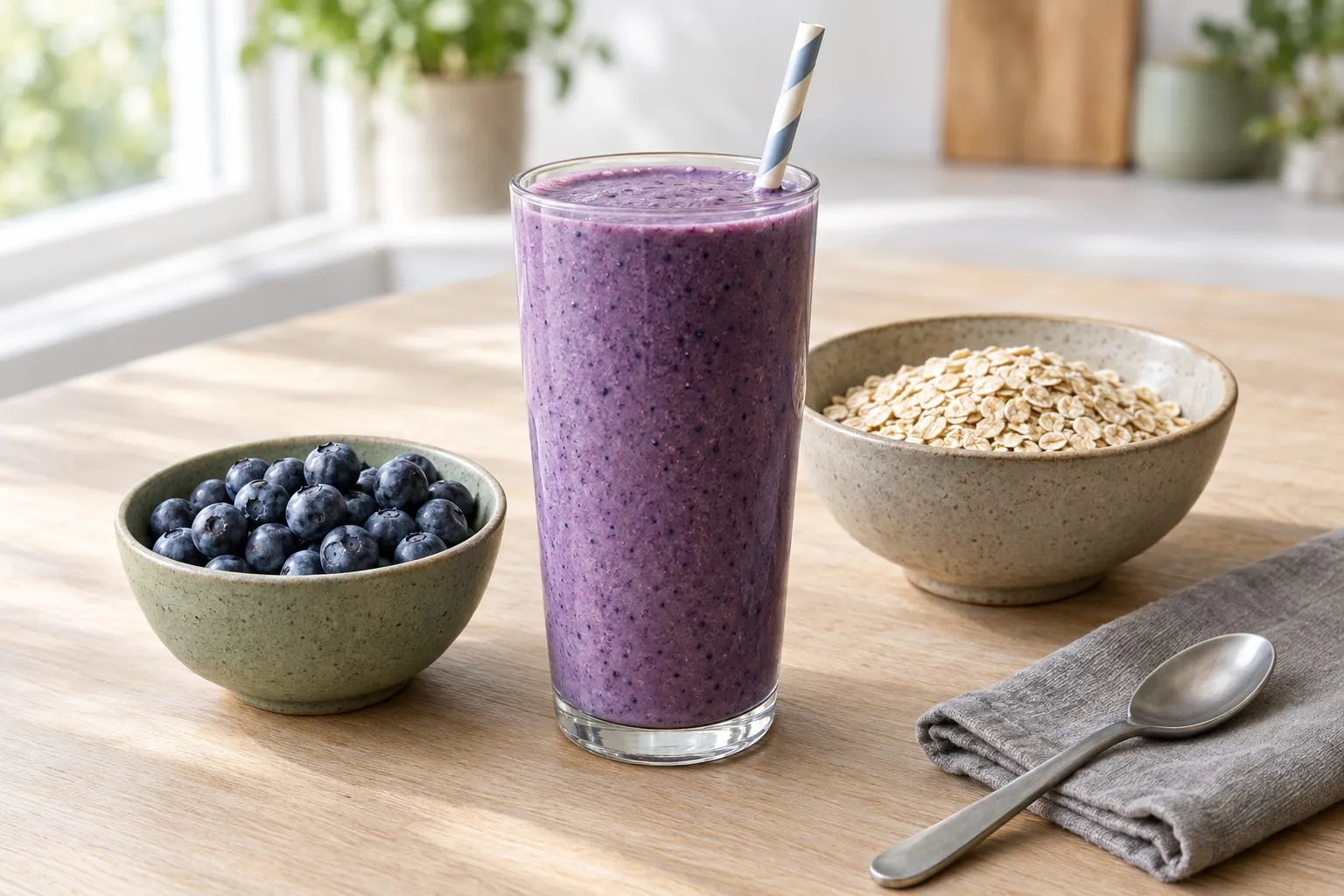
- The colour is an even purple-pink, with no blueberry skins or mango fibres showing.
- A spoon stands upright for a second before the smoothie slowly slumps, and it still pours.
Tips for success
- Use frozen fruit, but only 300 g
Frozen strawberries, blueberries and mango chill and thicken the smoothie, so no ice is needed. More than 300 g frozen fruit in this jug stalls the blades, so keep the banana fresh.
- Liquid first, then yogurt, then fruit
Milk goes in first, then the yogurt, then the fruit. The blades reach liquid straight away and drag the frozen pieces down into it.
- Choose the yogurt for protein
The 200 g strained 0% fat Greek yogurt gives about 21 g of the protein. Fruit gives only about 0.6–1.2 g per 100 g, so a fruit yogurt would lower the total.
Boost the protein
- Add 100 g extra strained Greek yogurt and 50 ml more milk: +12 g protein per glass. Use a 1 litre jug.
- Swap the 150 ml semi-skimmed milk for 100 g quark and 50 ml water: +9 g protein per glass.
Choosing ingredients
The four fruits weigh 400 g in total, which is five 80 g portions by weight. UK guidance counts a smoothie as a maximum of one of your 5 A DAY, however much fruit it holds.
Blackberries have 1.1 g protein per 100 g and guava 0.8 g, compared with 0.6 g for strawberries and 0.7 g for mango. The differences are small, and the yogurt does the real work.
Variations
- Blackberry smoothie
Swap the strawberries for 100 g frozen blackberries. Protein rises by about 0.5 g to roughly 30 g per glass.
- Guava and mango smoothie
Swap the blueberries for 100 g guava flesh and blend as before. Protein is about 29 g per glass.
Serve it with
- A slice of wholemeal toast
- A boiled egg
- A handful of nuts
Storage
Serve it at once for the best texture. Leftovers keep in a lidded bottle in the fridge until the next morning, and separate a little, so shake hard first.
To freeze it, fill ice cube trays and store for up to 1 month. Blend the cubes with 3 tbsp milk to bring it back.
Troubleshooting
Why is the protein fruit smoothie too thick to drink?
The fruit is frozen solid for the amount of liquid. Add 50 ml milk and blend for a further 10 seconds.
Why does the protein fruit smoothie taste sour?
Strained Greek yogurt is tart, and frozen berries add acidity. Use a banana with brown flecks, or add half a second banana (50 g), which makes it sweeter.
Frequently asked questions
How much protein is in this protein fruit smoothie?
One large glass has 29 g protein and 376 kcal, so 31% of the energy comes from protein. Of the protein, about 21 g comes from the yogurt and 5 g from the milk.
Do I need protein powder for a high protein fruit smoothie?
No. This protein fruit smoothie gets all of its protein from strained Greek yogurt and milk, and the fruit adds the rest.
Does the protein fruit smoothie contain added sugar?
No. The sugars come only from the fruit and milk, and the smoothie has 59 g carbohydrate in total. It contains no fruit juice, honey or syrup.
Which fruits have the most protein?
Per 100 g, blackberries have 1.1 g, bananas 1.2 g, guava 0.8 g and strawberries 0.6 g. The protein from the fruit in this smoothie is only about 3 g, so the yogurt is the main source.
Made it? Rate the recipe
Read next
- High Protein FruitsHigh-protein fruits are rare: dried apricots have 4.8 g protein per 100 g and passion fruit 2.6 g, while berries and apples stay under 1 g. Full table inside.
- How Much Protein Do You Need Per Day?How much protein do I need? The UK reference is 0.75 g per kg of body weight a day, or 52.5 g at 70 kg. See food values and a worked example day.
Written by The Protein Recipes editorial team. Nutrition is calculated from the ingredient list using CoFID. Read how our recipes are made and how we correct mistakes.