Protein guide
Protein in Potatoes and Sweet Potatoes
Quick answer
A baked sweet potato has 1.6 g protein per 100 g, so a 200 g one gives 3.2 g and 230 kcal. A baked white potato with skin has 2.5 g per 100 g, or 5.0 g in 200 g.
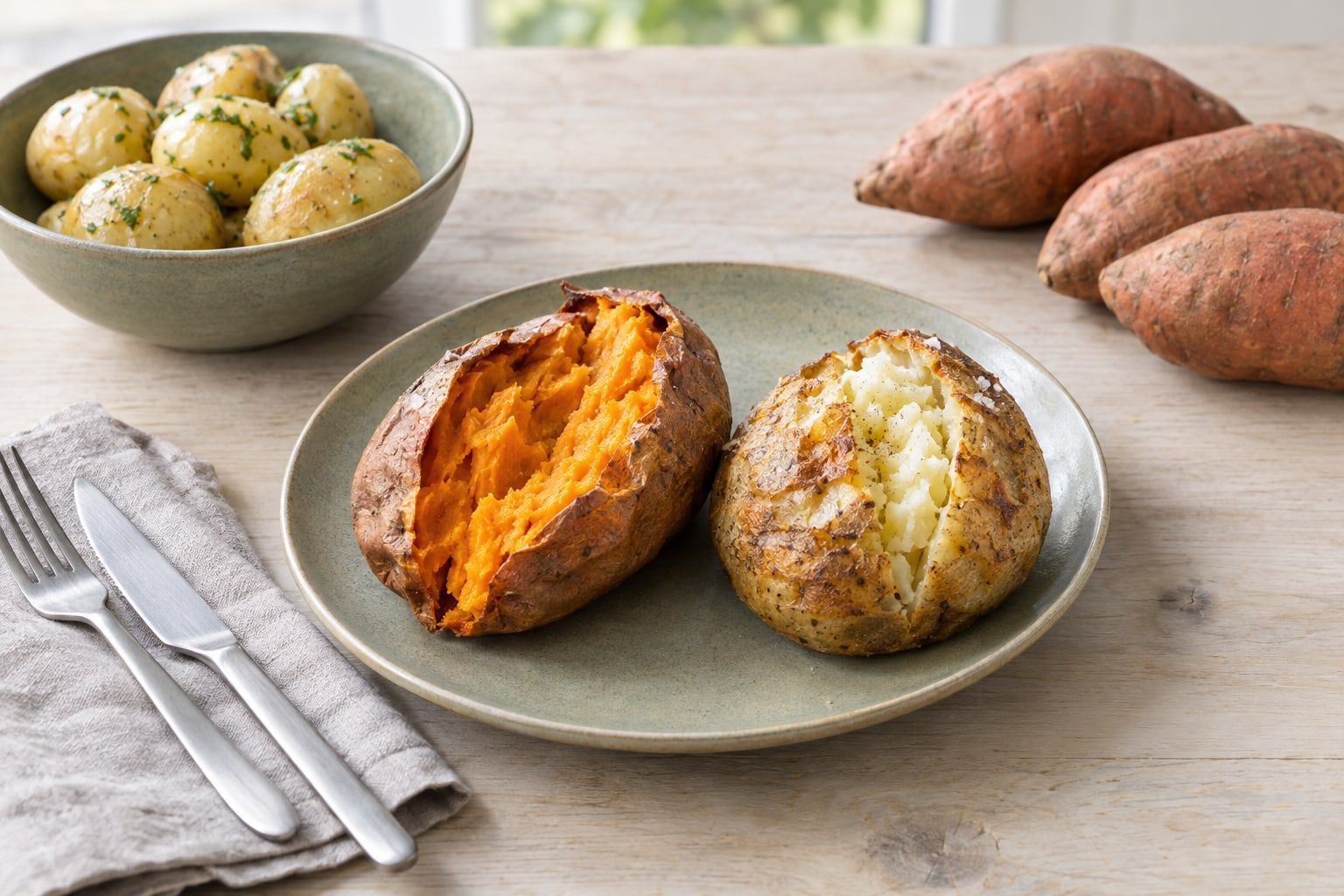
Sweet potatoes protein is modest: a baked sweet potato has 1.6 g protein per 100 g, so a typical 200 g one gives 3.2 g and 230 kcal. A baked white potato with its skin does slightly better at 2.5 g per 100 g, or 5.0 g in a 200 g jacket potato.
Cooking method and weight are the variables that move the numbers. Baked potato loses water in the oven, so its protein is more concentrated per 100 g than in boiled potato, which keeps its water. Mashing with butter or roasting in oil adds fat and energy without adding much protein. Whichever you use, the protein sits at roughly 1–3 g per 100 g, which makes potatoes a carbohydrate food first.
The practical move is to treat the potato as the base of the plate and add the protein separately. A sweet potato bowl with 150 g raw chicken breast reaches about 39 g, and a jacket potato with tuna, cottage cheese or beans gets into the same range. The potato still pays its way with fibre and energy, but the protein comes from the filling.
| Food | Protein | Energy | Fat |
|---|---|---|---|
| Potato, old, baked, flesh and skin | 2.5 g | 97 kcal | 0.2 g |
| Potato, old, boiled | 1.8 g | 74 kcal | 0.1 g |
| Potato, new, boiled, flesh and skin | 1.8 g | 68 kcal | 0.1 g |
| Potato, old, roasted in rapeseed oil | 2.6 g | 161 kcal | 5.7 g |
| Potato, old, mashed with butter | 1.9 g | 102 kcal | 3.9 g |
| Sweet potato, baked | 1.6 g | 115 kcal | 0.4 g |
| Sweet potato, steamed | 1.1 g | 84 kcal | 0.3 g |
| Sweet potato, boiled, flesh only | 1.7 g | 58 kcal | 0.2 g |
| Sweet potato, raw, flesh only | 1.2 g | 87 kcal | 0.3 g |
Source: CoFID – McCance and Widdowson's Composition of Foods Integrated Dataset 2021 (codes 13-491, 13-490, 13-495, 13-534, 13-553, 13-672, 13-671, 13-646, 13-463)
| Portion | Weight | Protein | Energy |
|---|---|---|---|
| 1 baked potato with skin | about 200 g | 5.0 g | 194 kcal |
| 1 baked sweet potato | about 200 g | 3.2 g | 230 kcal |
| Boiled new potatoes | about 175 g | 3.2 g | 119 kcal |
| Boiled old potatoes | about 200 g | 3.6 g | 148 kcal |
| Roast potatoes | about 200 g | 5.2 g | 322 kcal |
| Baked sweet potato with 150 g raw chicken breast | about 350 g | 39.2 g | 389 kcal |
Source: Calculated from CoFID values; the chicken row uses a typical value for raw skinless chicken breast fillet (24 g protein and 106 kcal per 100 g); portion weights are typical
How much protein is in a sweet potato?
Baked sweet potato has 1.6 g protein per 100 g, so a 200 g potato gives 3.2 g protein and 230 kcal. Steamed sweet potato is lower at 1.1 g per 100 g, and boiled flesh without the skin is 1.7 g. Only about 6% of the energy in a baked sweet potato comes from protein, because most of the rest is starch and sugar. It is a carbohydrate food that happens to contain a little protein, rather than a protein source in its own right.
Is there more protein in a white potato?
Per 100 g, yes. A baked potato with skin has 2.5 g protein against 1.6 g in a baked sweet potato, and a 200 g jacket potato gives 5.0 g, which is 1.8 g more than the same weight of sweet potato. It also has fewer calories, at 194 kcal against 230 kcal. Roasting in rapeseed oil lifts the figure only slightly, to 2.6 g per 100 g, while the energy rises to 161 kcal. About 10% of the energy in a baked potato comes from protein.
Does the way you cook potatoes change the protein?
The protein in the potato does not change, but the weight does. Baked potato loses water in the oven, so it lists 2.5 g per 100 g against 1.8 g for boiled old potato, which holds on to water. Mashing with butter dilutes the potato with fat and gives 1.9 g. Sweet potato figures are less tidy, from 1.1 g per 100 g steamed to 1.7 g boiled, since the water content differs by method. When you track protein, use the value for the way you cooked it and weigh it cooked, not raw.
How can you make a sweet potato bowl high in protein?
The sweet potato supplies the base, and a separate protein food has to do the work. A 200 g baked sweet potato with 150 g raw chicken breast gives about 39 g protein and 389 kcal, and the chicken accounts for 36.0 g of that, around 92%. For a vegetarian bowl, 150 g drained tinned kidney beans add 12.9 g, which brings the total to 16.1 g, and 150 g of firm tofu brings it to about 22 g. Cottage cheese, a fried egg or a spoonful of strained Greek yogurt on top are easy extras.
Where do potatoes fit into a day's protein?
The reference intake used on UK food labels is 50 g protein a day, so a baked potato covers about 10% of it. That is a useful contribution to a meal rather than a main source. The NHS Eatwell Guide names beans, pulses, fish, eggs and meat as good sources of protein, and potatoes work best alongside those. A jacket potato with tuna, cottage cheese or beans turns it into a meal with 25 g or more, depending on the filling.
Practical tips
- Eat the skin
The 2.5 g per 100 g figure for baked potato is for flesh and skin together. Peeling a potato removes some of the fibre.
- Pair it with a protein food
Plan the potato or sweet potato as the base of the meal and choose the protein separately. Chicken, fish, eggs, beans or cottage cheese each add far more than the potato itself.
- Weigh sweet potato after baking
A baked sweet potato gives 1.6 g protein per 100 g, a raw one 1.2 g. Use the value that matches how you weighed it, or you will under- or overcount.
Myth or fact
- Myth
Is it true that sweet potatoes have more protein than white potatoes?
No. Per 100 g, baked white potato has 2.5 g protein and baked sweet potato 1.6 g. Sweet potato is higher in fibre and has more energy per 100 g, not more protein.
- Myth
Is it true that potatoes contain no protein?
No. A 200 g baked potato has 5.0 g protein. It is not a rich source, but it is a small, steady contribution to the day.
Frequently asked questions
How much protein is in a baked sweet potato?
A baked sweet potato of about 200 g has 3.2 g protein and 230 kcal. Per 100 g the figure is 1.6 g.
Does sweet potato have protein?
Yes, but not much. Around 6% of the energy in baked sweet potato comes from protein, so it is mainly a source of carbohydrate.
How much protein is in a baked potato?
A 200 g baked potato with the skin has 5.0 g protein and 194 kcal. Boiled new potatoes give 3.2 g in a 175 g portion.
Is sweet potato a good protein source for vegetarians?
On its own, no. A vegetarian sweet potato bowl needs beans, tofu, eggs or cottage cheese. With 150 g drained kidney beans, a 200 g sweet potato gives 16.1 g protein.
How much protein is in a sweet potato protein bowl?
A bowl of 200 g baked sweet potato and 150 g raw chicken breast has about 39 g protein. The chicken supplies 36.0 g and the sweet potato 3.2 g.
Recipes to try
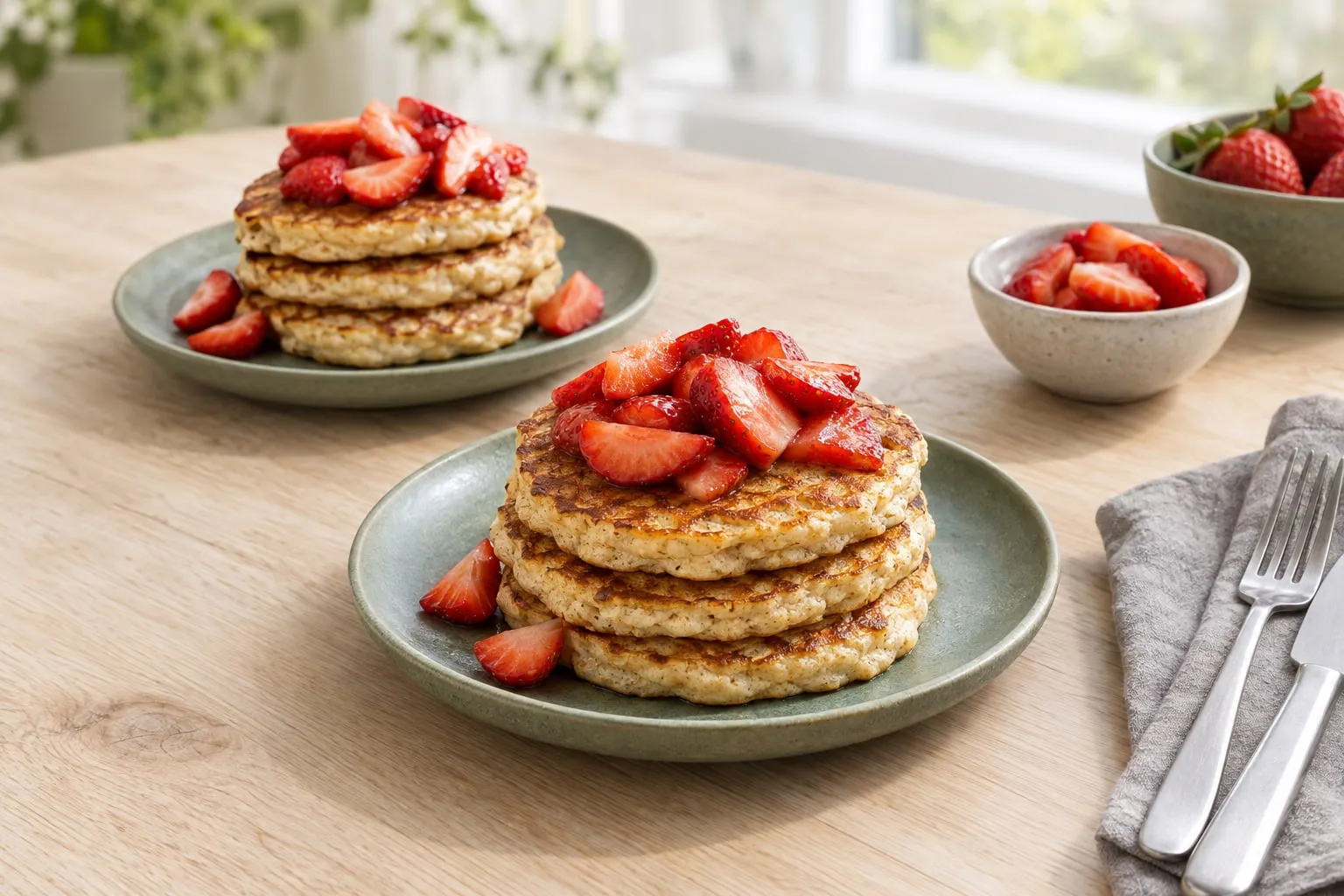
Protein Pancakes
31 g protein342 kcal25 minVegetarian
A quick breakfast that leans on added protein rather than on starchy vegetables.
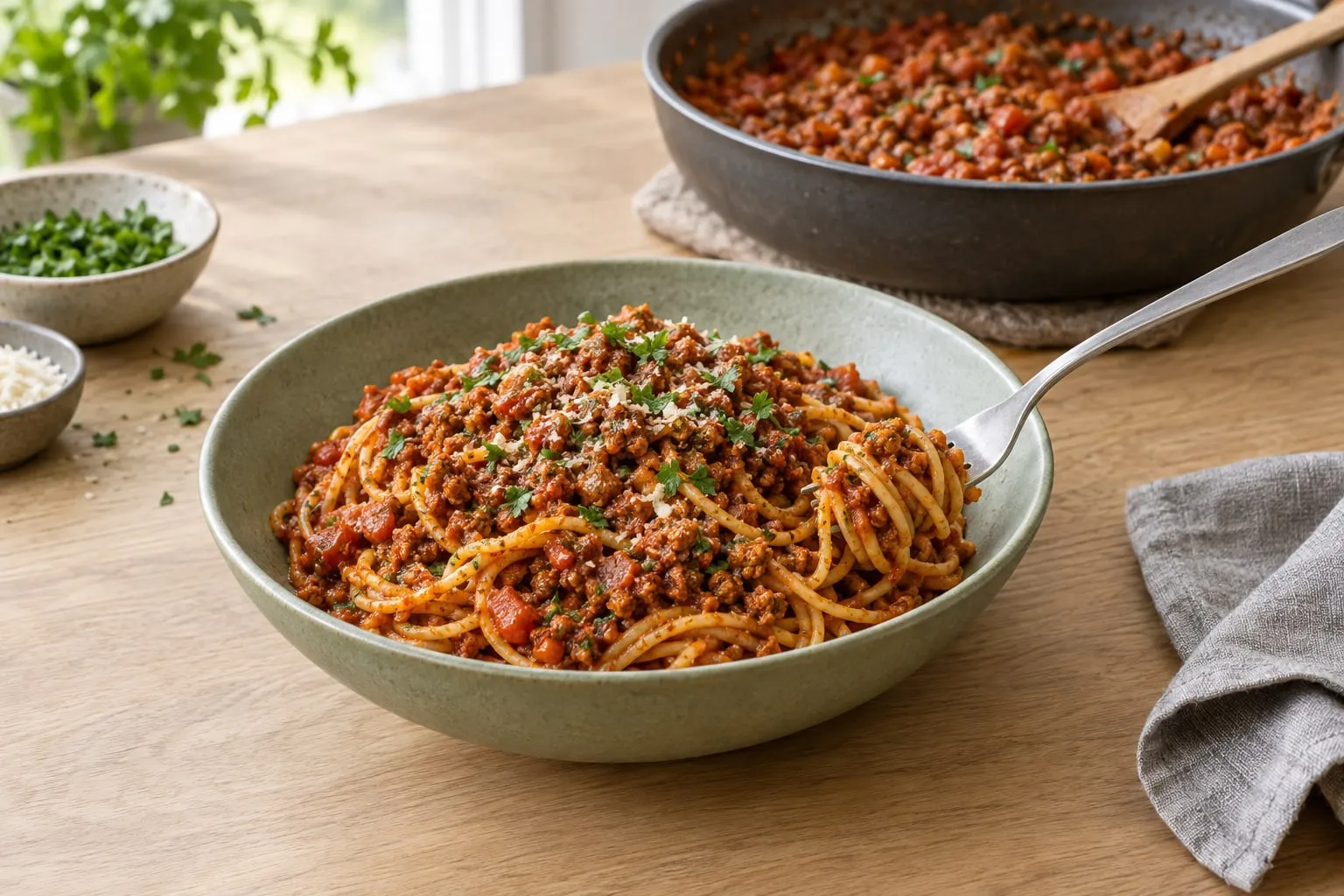
TVP Mince Bolognese
30 g protein476 kcal55 minVegetarianVegan
A mince-style sauce that pairs well with a jacket potato or sweet potato.
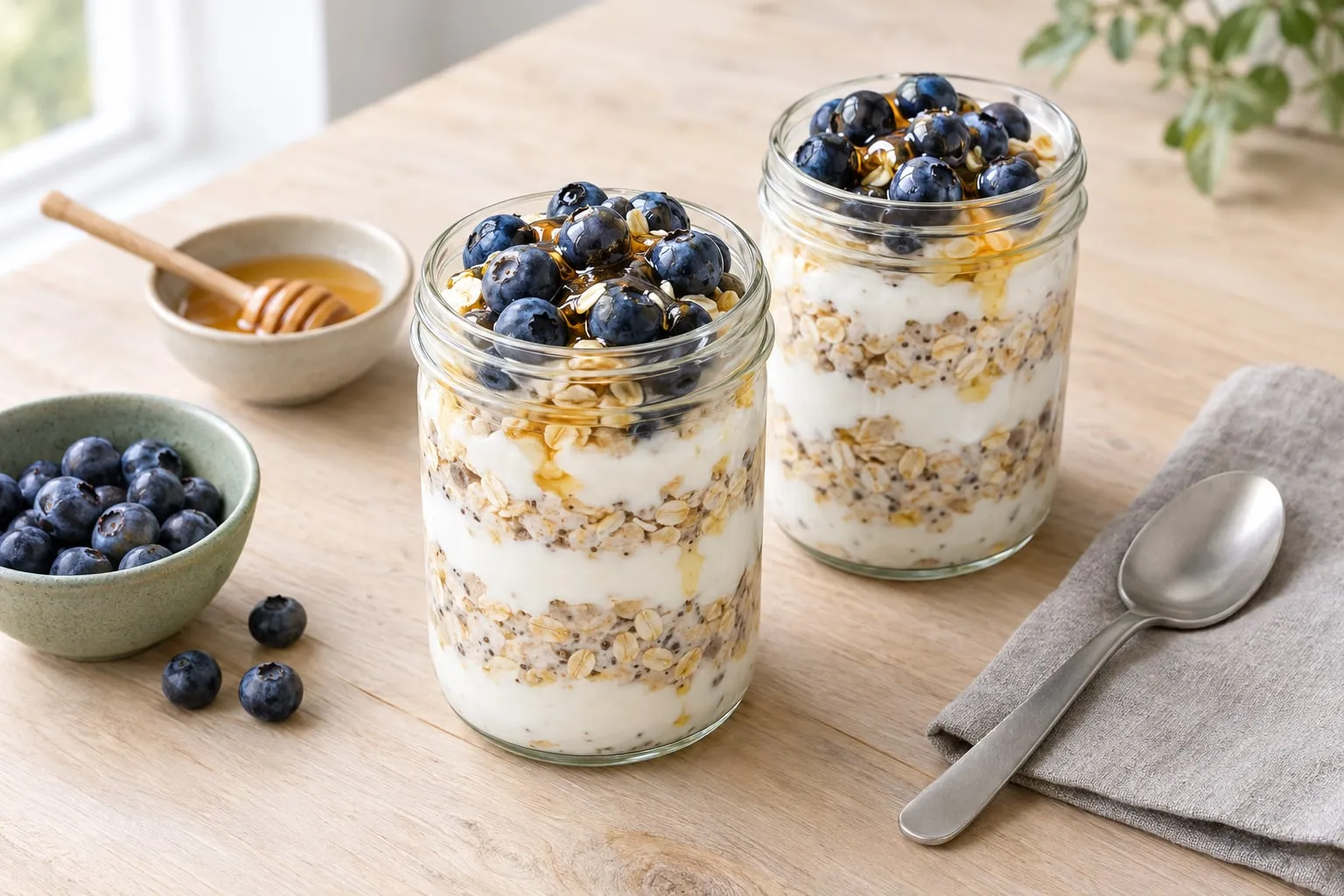
Protein Overnight Oats
26 g protein334 kcal8 hr 5 minVegetarian
A make-ahead breakfast for people who want protein with their carbohydrate.
Sources
- McCance and Widdowson's Composition of Foods Integrated Dataset 2021 (CoFID) – Values for baked, boiled, roasted and mashed potato and for raw, baked, steamed and boiled sweet potato
- NHS Eatwell Guide – Lists beans, pulses, fish, eggs and meat as good sources of protein
Read our editorial policy for how figures are checked and how to report a mistake.
More protein guides
All guides
Guide
High Protein Foods: A Ranked List
High protein foods ranked by protein per 100 g and per 100 kcal: Parmesan has 36.2 g, grilled chicken 32.0 g, dried red lentils 25.6 g and egg white 10.8 g.

Guide
How Much Protein Do You Need Per Day?
How much protein do I need? The UK reference is 0.75 g per kg of body weight a day, or 52.5 g at 70 kg. See food values and a worked example day.
Guide
What Is Protein and Why Do We Need It?
What is protein good for? It is made of amino acids, nine of them essential. See what it does, the UK 0.75 g per kg a day reference and food values.
Guide
Lean Protein: Best Sources
Lean protein sources ranked by fat: raw chicken breast has 24.0 g protein and 1.1 g fat per 100 g, tuna 24.9 g and 1.0 g. Meat, fish and dairy compared.