Method
Tap a time to start a timer.
Warm 60 ml of the skimmed milk in a small saucepan or in the microwave until hot but not boiling.
In a medium bowl, mix the whey, cocoa powder and honey with the warm milk to a thick, smooth paste with no dry lumps.
Stir in the remaining 180 ml cold skimmed milk, then the Greek yogurt and the porridge oats until combined.
Divide the mixture between the two jars and put on the lids. Chill until the oats have softened and the mixture is thick.
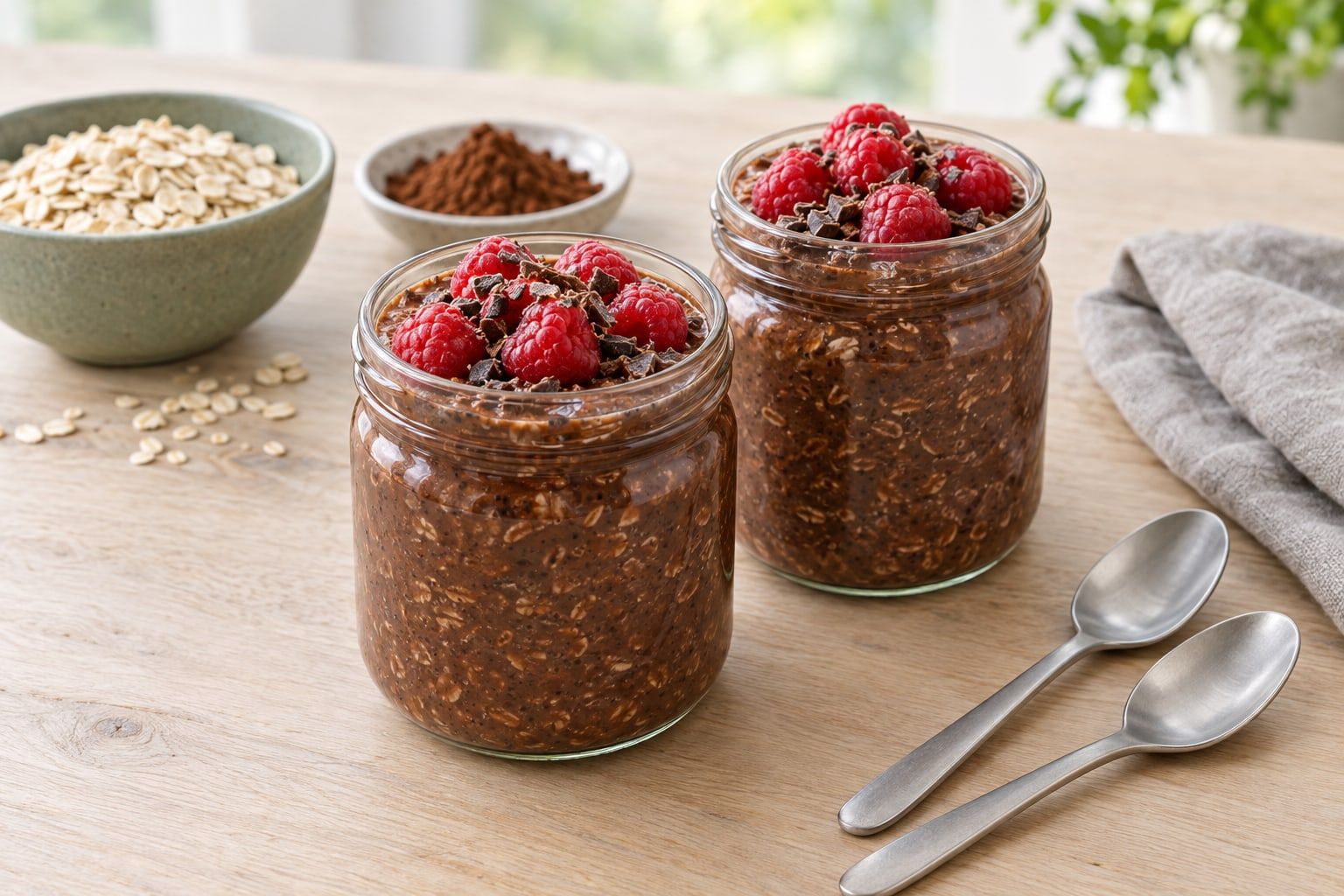
Stir each jar and loosen with 30 ml skimmed milk. Top each jar with 80 g raspberries and eat cold.
How to tell it's done
- The oats are soft all the way through and there is no dry oat at the bottom of the jar.
- The mixture is thick enough to hold a spoon upright and is evenly dark brown with no streaks of cocoa.
Tips for success
- Make the cocoa paste first
Cocoa and whey stirred straight into cold milk float in dry clumps that never break up. Mix them with the warm milk into a thick paste first, then loosen it with the rest of the milk.
- Loosen the jar in the morning
Whey keeps thickening in the fridge, so the oats can be stiff after 8 hours. Stir in the extra 30 ml milk per jar before topping with raspberries.
- Keep the cocoa to 10 g a jar
More cocoa turns the oats bitter and dry rather than chocolatey. If you want a stronger flavour, add another half teaspoon of honey instead of more cocoa.
Boost the protein
- Use 40 g chocolate whey in each jar instead of 30 g: +7.5 g protein per jar.
- Swap the 100 g Greek yogurt in each jar for 100 g quark: +4.3 g protein per jar and a slightly fresher taste.
Choosing ingredients
Whey chocolate powder blends smoothest. Casein thickens the jar more and needs about 50 ml extra milk, and vegan pea and rice powder is grainier and wants a little more liquid too.
Buy unsweetened cocoa powder, not drinking chocolate. Drinking chocolate is mostly sugar and gives far less flavour for the same spoonful.
Variations
- With dark chocolate
Top each jar with 10 g grated dark chocolate in place of the raspberries. Protein stays at about 45 g per jar.
- With less powder
Use 20 g whey per jar instead of 30 g. Protein falls by about 7.5 g per jar and the jar is a little looser, so add 20 ml less milk in the morning.
Serve it with
- A black coffee or tea
- Sliced banana
- A few chopped hazelnuts
Storage
Keep the jars covered in the fridge and eat them within 3 days. The raspberries go on only when a jar is eaten.
Freezing is not worth it, because the yogurt turns grainy once thawed.
Troubleshooting
Why are my chocolate protein overnight oats lumpy?
The cocoa and whey went into cold liquid dry. Make the paste with 60 ml warm milk first, and stir the paste until smooth before adding the oats and yogurt.
Why are my chocolate protein overnight oats too thick?
Whey keeps absorbing liquid in the fridge. Stir in 30–50 ml extra skimmed milk before eating, and use 50 ml more milk in the jar next time.
Frequently asked questions
How much protein is in chocolate protein overnight oats?
Each jar has 45 g protein and 444 kcal, so 41% of the energy comes from protein. The whey and the Greek yogurt supply most of it.
How long do chocolate overnight oats need in the fridge?
Chill them for 6 hours at the least. The texture is best after 8 hours, and the jars last for 3 days.
Can I make chocolate overnight oats without protein powder?
Yes. Leave out the whey and use 200 g Greek yogurt per jar with 100 ml milk. Each jar then has about 32 g protein.
Can I cut the chocolate whey down?
Yes. With 20 g whey per jar the oats have about 38 g protein, and the jar is slightly less thick.
Made it? Rate the recipe
Read next
- Protein in OatsProtein in oats: porridge oats have 10.9 g protein per 100 g dry, so a 40 g portion gives 4.4 g. Porridge made with milk or water, and ways to add more.
- How Much Protein Do You Need Per Day?How much protein do I need? The UK reference is 0.75 g per kg of body weight a day, or 52.5 g at 70 kg. See food values and a worked example day.
Written by The Protein Recipes editorial team. Nutrition is calculated from the ingredient list using CoFID. Read how our recipes are made and how we correct mistakes.