Method
Tap a time to start a timer.
Put the eggs, cottage cheese, porridge oats, baking powder and salt into the blender. Blend until completely smooth, scraping down the sides once.
30 sec
Leave the batter to stand while you heat the frying pan over a medium heat.
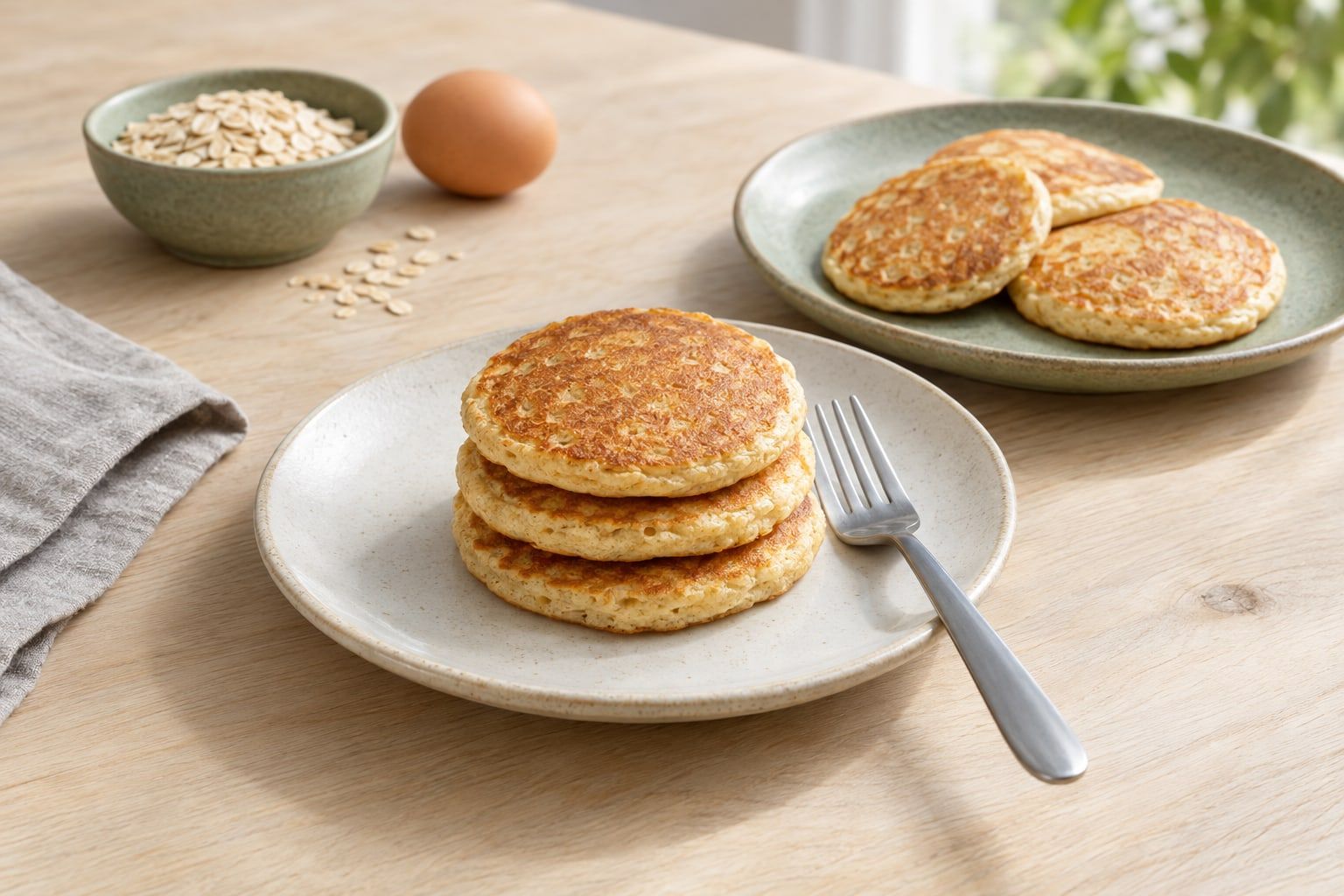
Rub the pan with the rapeseed oil on kitchen paper. Pour in about 4 tablespoons (60 ml) of batter per pancake to make three pancakes about 10 cm wide. Cook until the edges are set and bubbles appear on top.
Flip the pancakes and cook the second side until golden.
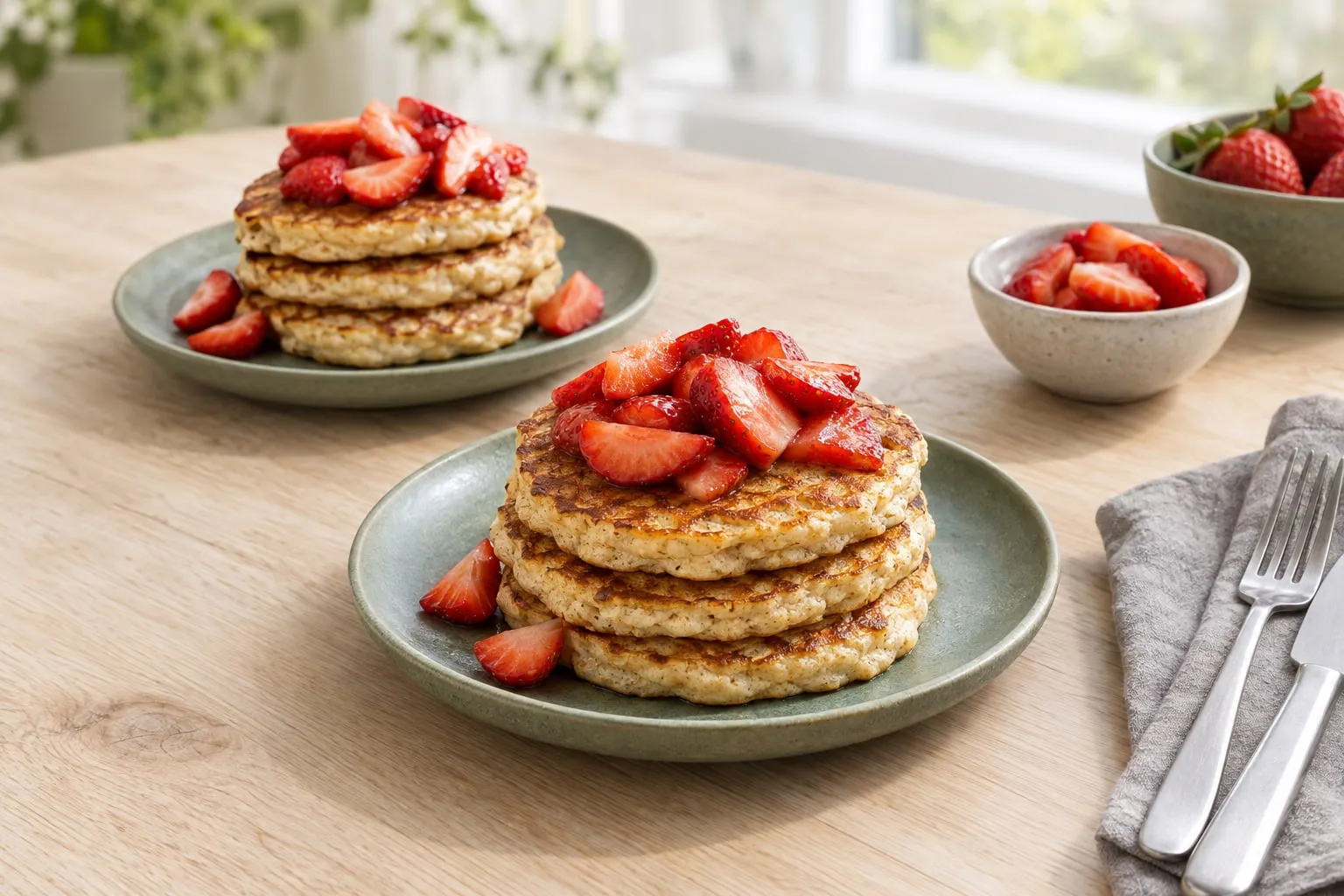
Slide the first three onto a plate and cover with a second plate to keep warm. Wipe the pan if needed and cook the remaining batter in the same way, then serve three pancakes per person.
How to tell it's done
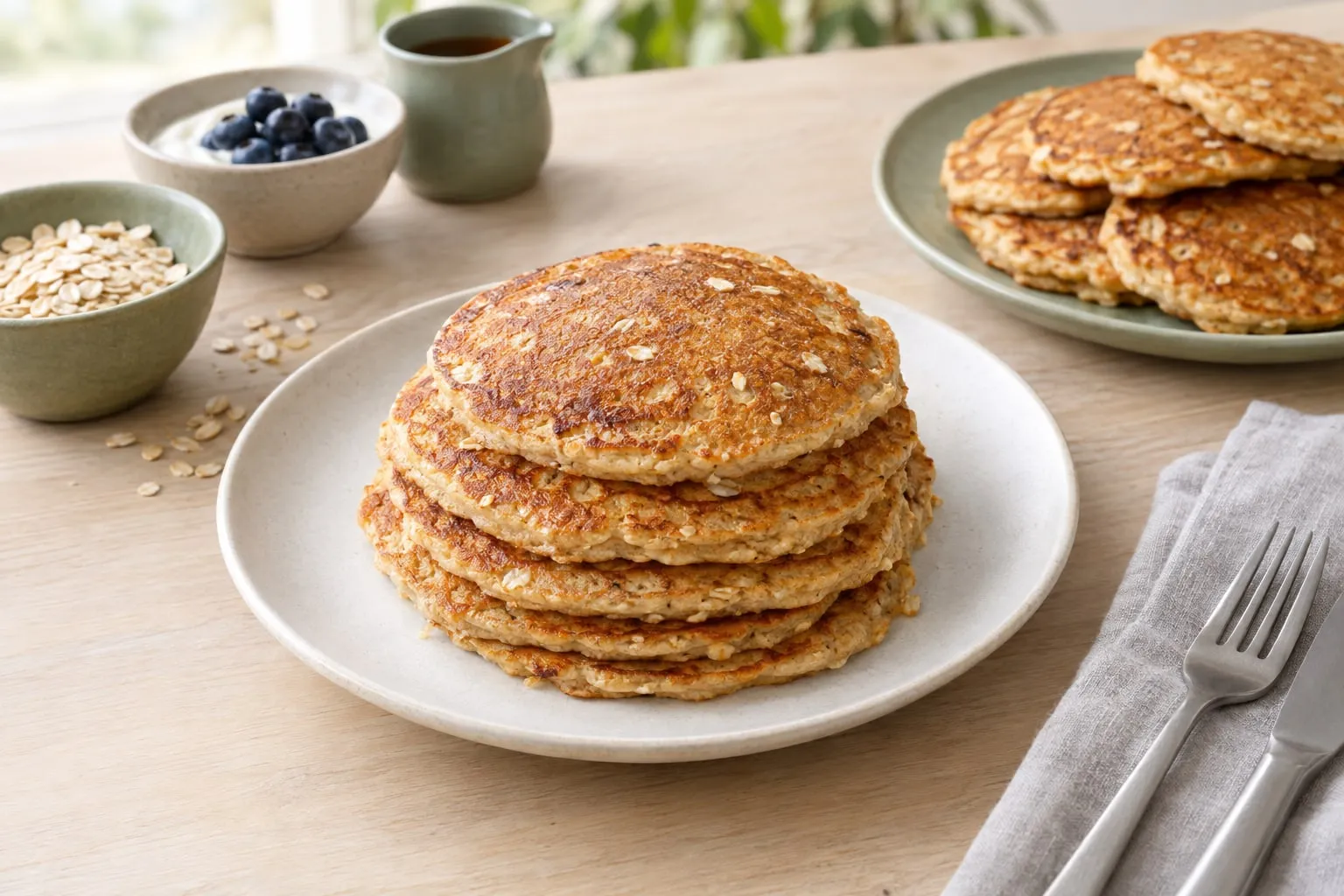
- The edges are dry and set, and small bubbles have formed on the surface before the pancake is turned.
- Both sides are golden brown and the centre springs back when pressed lightly.
Tips for success
- Blend until the cottage cheese disappears
Lumps of cottage cheese leave wet pockets that tear when the pancake is turned. Blend for a full 30 seconds, then check the jug wall for curds before resting the batter.
- Rest the batter for 5 minutes
The oats soak up liquid while the batter stands, so it thickens enough to hold a round shape in the pan. Heat the frying pan during this time.
- Turn when the edge is set
These pancakes have no flour, so they are softer than a classic pancake. Wait until the edge looks dry and matt and the surface is dotted with small bubbles, then flip once with a wide spatula.
Boost the protein
- Serve each portion with 100 g strained Greek yogurt in place of syrup: +10 g protein per serving.
- Replace the 60 g porridge oats with 60 g plain flour and 30 g whey protein powder: about +11 g protein per serving, but the pancakes are then no longer 3-ingredient.
Choosing ingredients
Reduced-fat cottage cheese blends smoother and has more protein per 100 g than the full-fat tub, at 10.6 g against 9.4 g. Small-curd tubs blend fastest.
Use rolled porridge oats rather than instant oats. They blend to a fine, even flour in the jug and keep the pancakes from turning gluey.
Variations
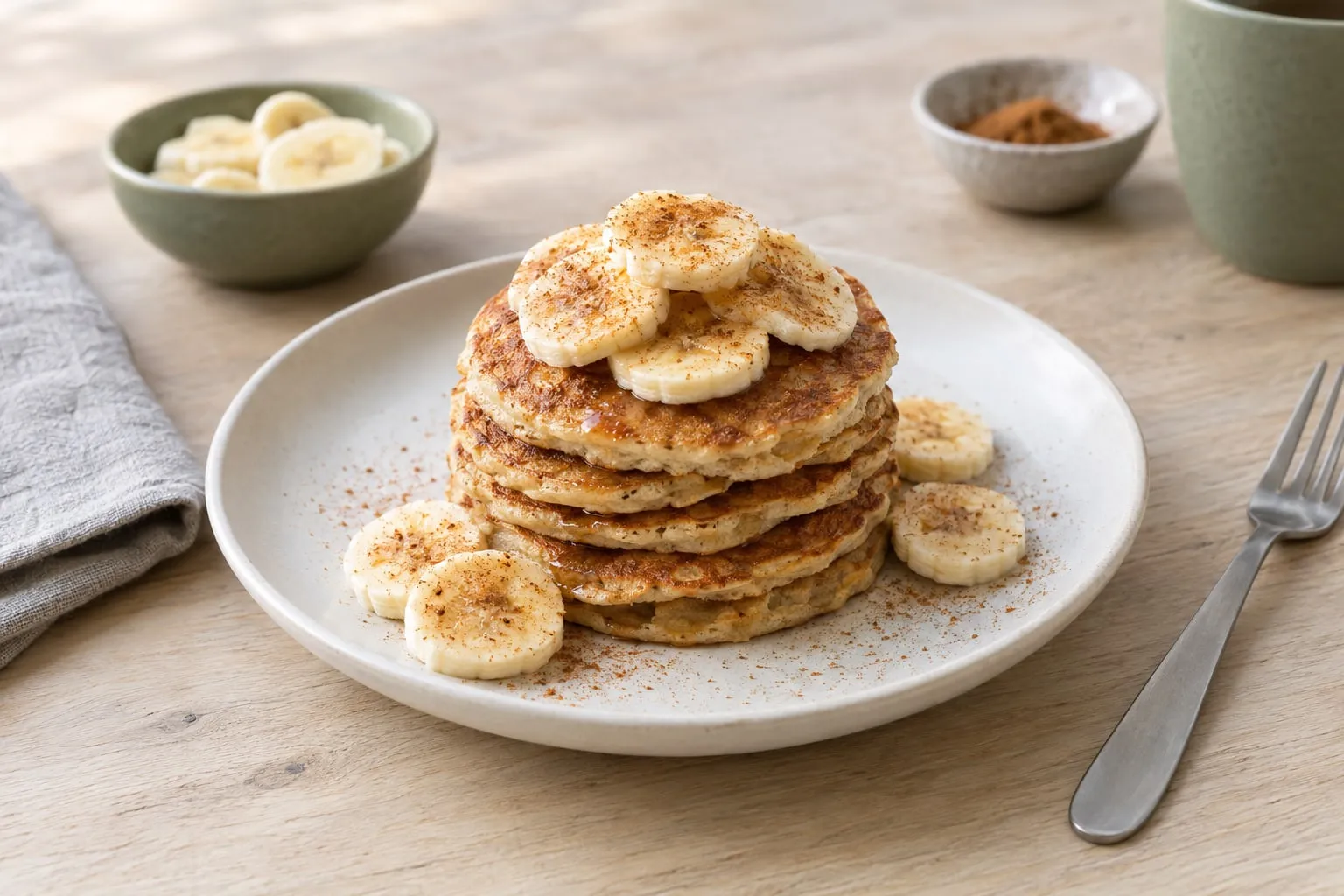
- With cinnamon and vanilla
Blend in 0.5 tsp ground cinnamon and 0.5 tsp vanilla extract. Neither adds meaningful calories or protein, so the numbers stay the same.
- With honey
Blend in 1 tsp honey for a sweeter batter. It adds about 20 kcal per portion and no protein, and the pancakes brown a little faster.
Serve it with
- Sliced strawberries or a handful of blueberries
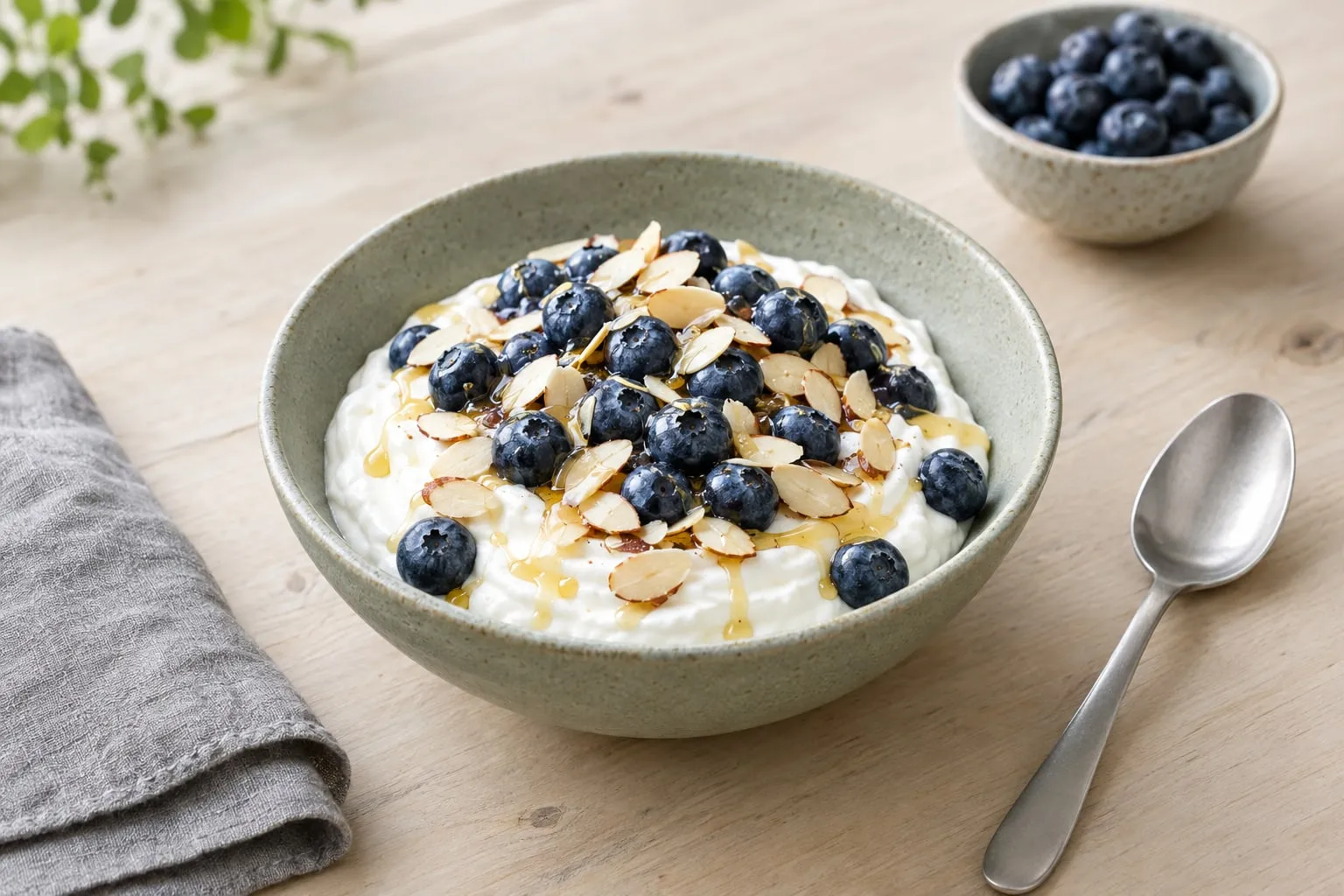
- Strained Greek yogurt
- Tea or black coffee
Storage
Leftover 3-ingredient pancakes keep for 2 days in the fridge in an airtight box, with baking paper between the layers.
Freeze them for up to 2 months, then reheat in a toaster or a hot frying pan until warm through.
Troubleshooting
Why do my 3-ingredient protein pancakes fall apart when I turn them?
The first side was not set. Lower the heat slightly, wait until the edge is dry and the top is covered with bubbles, and use a wide spatula so the pancake is supported.
Why are my 3-ingredient protein pancakes rubbery?
The pan was too hot, so the outside set before the middle cooked. Turn the heat down to medium-low and give each side the full time, and make the pancakes no thicker than 1 cm.
Frequently asked questions
What are the three ingredients in these protein pancakes?
Eggs, cottage cheese and porridge oats. The baking powder, a pinch of salt and 1 tsp of oil for the pan are not counted as ingredients, but the pancakes need all of them.
How much protein is in 3-ingredient protein pancakes?
Each portion of three pancakes has 21 g protein and 289 kcal, so 29% of the energy comes from protein.
Can I make 3 ingredient pancakes with protein without banana?
Yes. There is no banana in the batter. The oats and cottage cheese give the body, and the pancakes taste of egg and oats rather than fruit.
What do 3-ingredient protein pancakes taste like?
They are denser and more savoury than a classic pancake because they are made of egg and oats rather than flour, so they take a topping of fruit, yogurt or a little honey well.
Made it? Rate the recipe
Read next
- How Much Protein Do You Need Per Day?How much protein do I need? The UK reference is 0.75 g per kg of body weight a day, or 52.5 g at 70 kg. See food values and a worked example day.
- High Protein Foods: A Ranked ListHigh protein foods ranked by protein per 100 g and per 100 kcal: Parmesan has 36.2 g, grilled chicken 32.0 g, dried red lentils 25.6 g and egg white 10.8 g.
Written by The Protein Recipes editorial team. Nutrition is calculated from the ingredient list using CoFID. Read how our recipes are made and how we correct mistakes.