Method
Tap a time to start a timer.
Blend the porridge oats for 30 seconds until they form a fine flour. Tip them into a large bowl.
Add the pea and rice protein powder, plain flour, vital wheat gluten and baking powder to the bowl and whisk to combine.
Mash the banana with a fork in a second bowl until nearly smooth. Whisk in the oat drink and cider vinegar.
Pour the wet mixture into the dry and whisk until no dry pockets remain. Leave the batter to stand for 10 minutes. It starts out pourable and thickens as the powder absorbs the liquid.
Heat a 24–28 cm non-stick frying pan over a medium-low heat. Brush with the rapeseed oil using kitchen paper, then spoon in 4 pancakes of about 3 tablespoons of batter each.
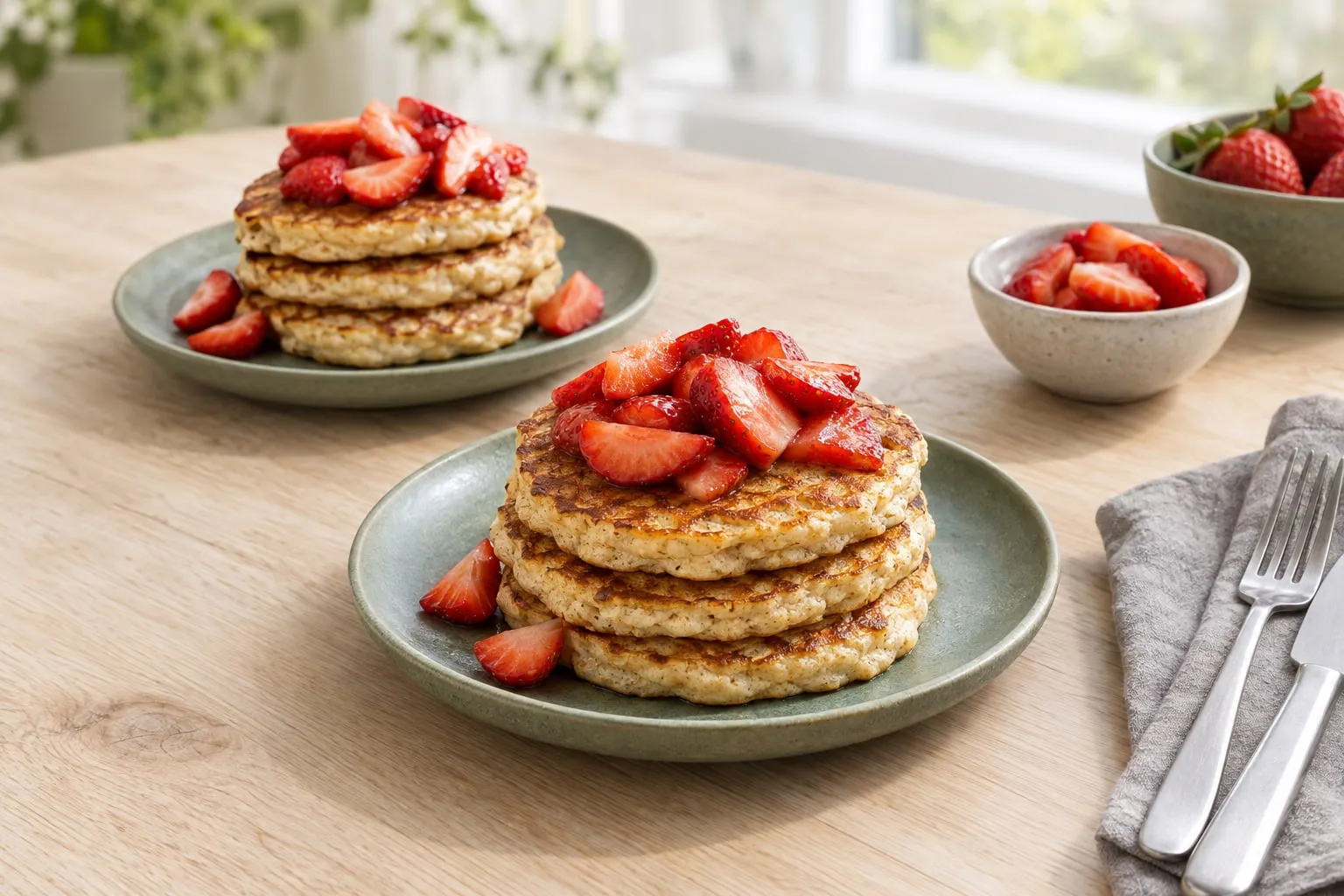
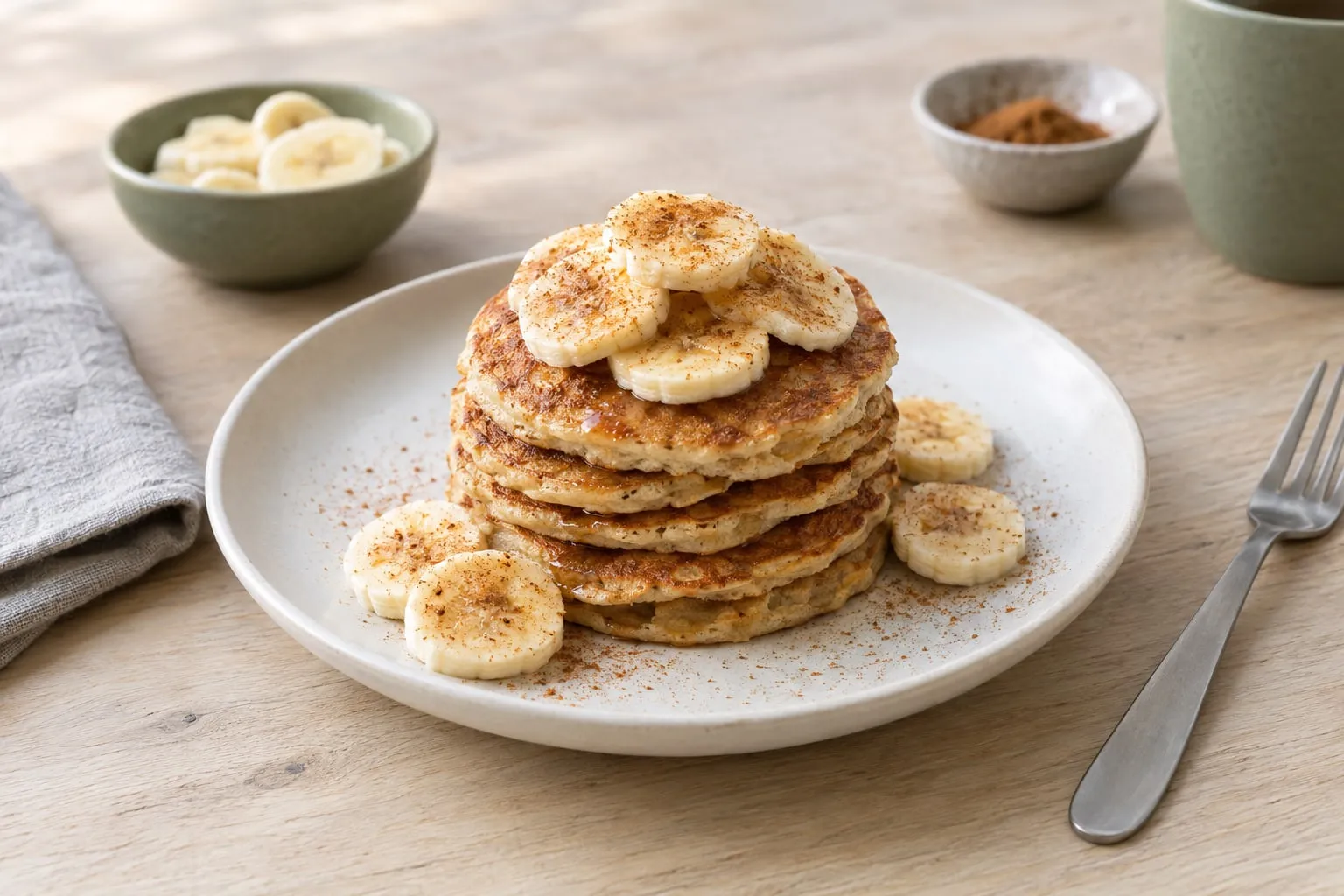
Flip the pancakes when bubbles appear and the edges are set. Cook the second side until golden, then lift onto a plate.
Cook the remaining batter in a second batch of 4 pancakes in the same way, then serve 4 pancakes per person.
How to tell it's done
- Bubbles appear across the surface and the edges look dry before the flip.
- Both sides are golden brown and the middle springs back when pressed.
Tips for success
- Rest the batter for the full 10 minutes
Pea and rice protein soaks up liquid slowly. Without the rest the pancakes taste grainy, and the batter thins out as it hydrates.
- Mash the banana until it is nearly smooth
Banana replaces the egg as the binder. Lumps of banana leave soft, wet patches, so mash it with a fork until almost smooth before adding the oat drink.
- Cook on medium-low heat
Banana browns quickly. Cook each pancake for 2–3 minutes until bubbles appear and the edges are set, then flip for 1–2 minutes.
- Make the pancakes small
Use about 3 tablespoons of batter per pancake, which is roughly 55 g. Thick vegan batter is harder to flip in larger rounds.
Boost the protein
- Swap the 200 ml oat drink for 200 ml soya drink, which has about 3.3 g protein per 100 ml: about +2 g protein per serving.
- Top each portion with 15 g of peanut butter: about +3 g protein per serving.
Choosing ingredients
Use a pea and rice protein blend. It tastes milder than pea protein on its own and gives a softer pancake. Expect a slightly grainy bite either way, which the 10-minute rest reduces.
Vital wheat gluten gives the batter structure in the absence of egg. It is wheat, so these pancakes are not gluten-free. Check the protein powder label too, as some blends contain milk or egg-derived ingredients.
Variations
- Vegan protein pancake mix
Multiply the dry ingredients by 4 (200 g pea and rice protein, 240 g oats blended to flour, 80 g plain flour, 80 g gluten and 28 g baking powder) and store the mix in a jar. For each batch of 8 pancakes, weigh out 157 g mix and add 100 g mashed banana, 200 ml oat drink and 1 tsp cider vinegar.
- Blueberry pancakes
Drop 8–10 blueberries onto each pancake as soon as the batter is in the pan. Flip gently and cook for the same time.
Serve it with
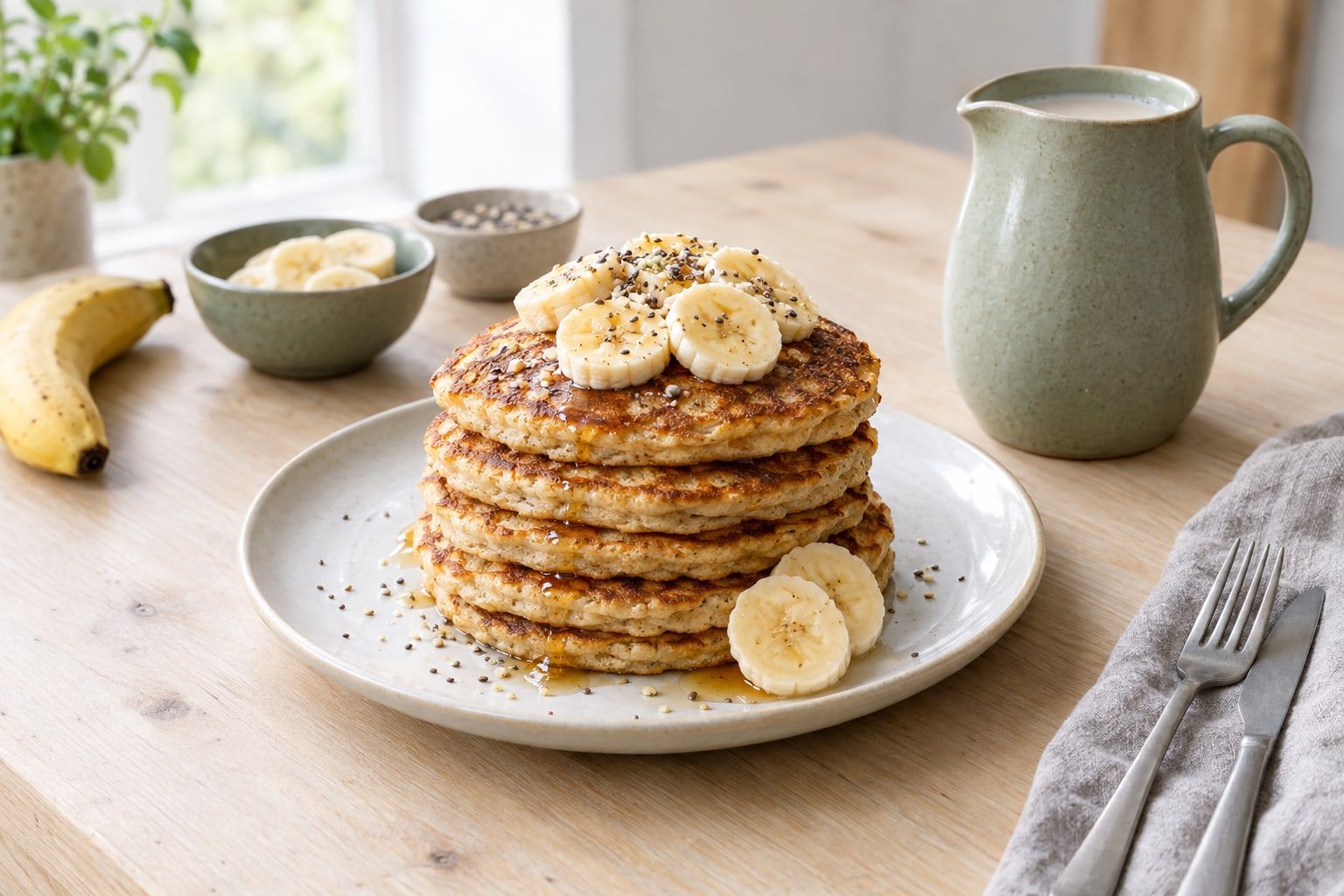
- Sliced banana
- Fresh berries
- Maple syrup
Storage
Cooled vegan protein pancakes keep in an airtight container in the fridge for up to 3 days.
Freeze them with baking paper between each pancake for up to 2 months and reheat in a toaster.
Troubleshooting
Why are my vegan protein pancakes gritty?
The batter went into the pan too soon. Rest it for the full 10 minutes so the pea and rice protein hydrates, and add 1–2 tablespoons of extra oat drink if it has thickened a lot.
Why do the vegan protein pancakes break when I flip them?
There is no egg to bind them, so they need time to set. Wait until bubbles break on the surface and the edges look dry, and keep each pancake to about 3 tablespoons of batter.
Frequently asked questions
How much protein is in vegan protein pancakes?
Each serving of 4 pancakes has 32 g protein and 391 kcal, so 33% of the energy comes from protein.
Can I make vegan protein pancakes without protein powder?
They need some powder to reach this protein level. Without the pea and rice protein, each serving falls to around 13 g protein.
Can I make a vegan protein pancakes mix in advance?
Yes. Weigh the dry ingredients into a jar, multiplied by 4, and keep it in a cool cupboard for up to 2 months. Add banana, oat drink and vinegar only when cooking.
Made it? Rate the recipe
Read next
- Vegan Protein SourcesSources of protein for vegans: tempeh has 20.7 g protein per 100 g, dried red lentils 25.6 g and firm tofu 12.5 g. Values per 100 g and per portion.
- How Much Protein Do You Need Per Day?How much protein do I need? The UK reference is 0.75 g per kg of body weight a day, or 52.5 g at 70 kg. See food values and a worked example day.
Written by The Protein Recipes editorial team. Nutrition is calculated from the ingredient list using CoFID. Read how our recipes are made and how we correct mistakes.