Method
Tap a time to start a timer.
Slice the chicken into 1.5 cm strips. Crush the garlic, grate the ginger and slice the spring onions. Stir the garlic, ginger, soy sauce, honey, rice vinegar and water together in a jug.
Rinse the basmati rice and tip it into a pan of boiling water. Cook for 10 minutes.
Meanwhile, heat the rapeseed oil in the frying pan over a medium-high heat. Fry the chicken for 5–6 minutes, turning, until golden and cooked through.
Add the edamame beans to the rice pan for the last 3 minutes of cooking, then drain the rice and beans together and keep them warm.
Pour the glaze into the chicken pan and simmer for 2–3 minutes, stirring, until it is glossy and coats the chicken. The thickest strip should read 75°C or be white all the way through.
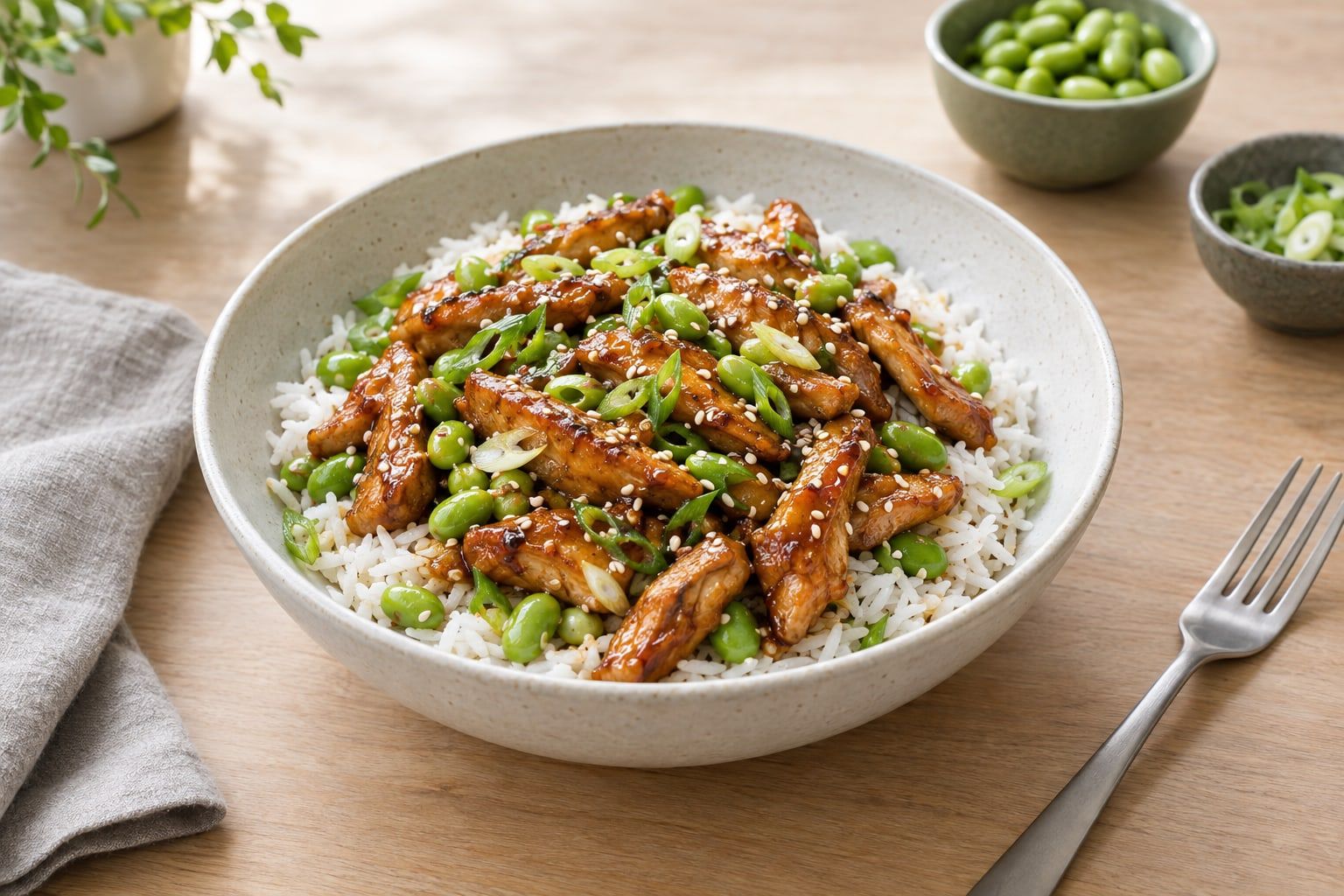
Divide the rice and edamame between four bowls, spoon over the chicken and glaze, and scatter over the spring onions and sesame seeds.
How to tell it's done
- Core temperature: 75°C in the thickest part, checked with a probe thermometer.
- The thickest strip of chicken is white all the way through and reads 75°C.
- The glaze is glossy and coats the back of a spoon.
Tips for success
- Slice the chicken evenly
Cut the fillets across the grain into strips about 1.5 cm thick, so every piece is done in the same 5–6 minutes.
- Stay by the pan when the glaze goes in
The honey caramelises fast. Once the sauce is in, stir constantly and take the pan off the heat as soon as it coats the chicken, after 2–3 minutes.
- Cook the edamame with the rice
The edamame go into the rice pan for the last 3 minutes, so there is no extra pan to wash and the beans are tender but still bright.
Boost the protein
- Use 200 g edamame beans instead of 150 g: +1.4 g protein per serving.
- Replace the 320 g basmati with 320 g dried lentil or chickpea pasta, boiled for 8–10 minutes: +11 g protein per serving.
Choosing ingredients
Use reduced-salt soy sauce if you can find it, as 3 tablespoons of regular soy sauce is the main source of salt in the dish.
Pick chicken breast fillets rather than pre-diced chicken, which is cut unevenly and cooks at different speeds.
Variations
- With cauliflower rice
Swap the basmati for 400 g cauliflower rice stir-fried for 4 minutes. Protein per serving falls by about 5 g and the calories drop by around 250 kcal.
- With chicken thigh fillets
Use 700 g boneless, skinless thigh fillets cut into strips and fry for 8–9 minutes. The dish is juicier and slightly higher in fat.
Serve it with
- Steamed pak choi
- Cucumber and sesame salad
- Stir-fried green beans
Storage
Keep leftover teriyaki chicken and rice in separate airtight containers in the fridge for up to 2 days.
Reheat in a frying pan or microwave until piping hot, adding a splash of water if the glaze has thickened.
Troubleshooting
Why did my teriyaki chicken glaze burn?
The pan was too hot when the honey went in. Lower the heat to medium before adding the glaze and take the pan off the heat as soon as the sauce coats the chicken.
Why is my teriyaki chicken tough?
The strips were too thick or overcooked. Slice them to 1.5 cm and stop frying as soon as the thickest piece reads 75°C.
Frequently asked questions
How much protein is in this teriyaki chicken?
Each of the four servings has 48 g protein and 560 kcal, so 34% of the energy comes from protein. That includes the rice and edamame.
How much sugar is in homemade teriyaki chicken?
The glaze has 1 tablespoon of honey for four servings, which is about 4 g sugar per portion, far less than a bought teriyaki sauce.
Can I make teriyaki chicken gluten-free?
Yes. Swap the soy sauce for tamari and check the label on the rice vinegar. The method stays the same.
Made it? Rate the recipe
Read next
- How Much Protein Is in Chicken Breast?How much protein in a chicken breast: a raw 150 g fillet has 36.0 g protein and 159 kcal. Per 100 g raw and cooked, with fillet sizes and pack totals.
- Protein in Chicken Thighs and DrumsticksProtein in chicken thighs: a cooked bone-in thigh of 120 g has 21.4 g protein, and two boneless raw thighs have 41.8 g. Drumsticks, skin and bone compared.
Written by The Protein Recipes editorial team. Nutrition is calculated from the ingredient list using CoFID. Read how our recipes are made and how we correct mistakes.